


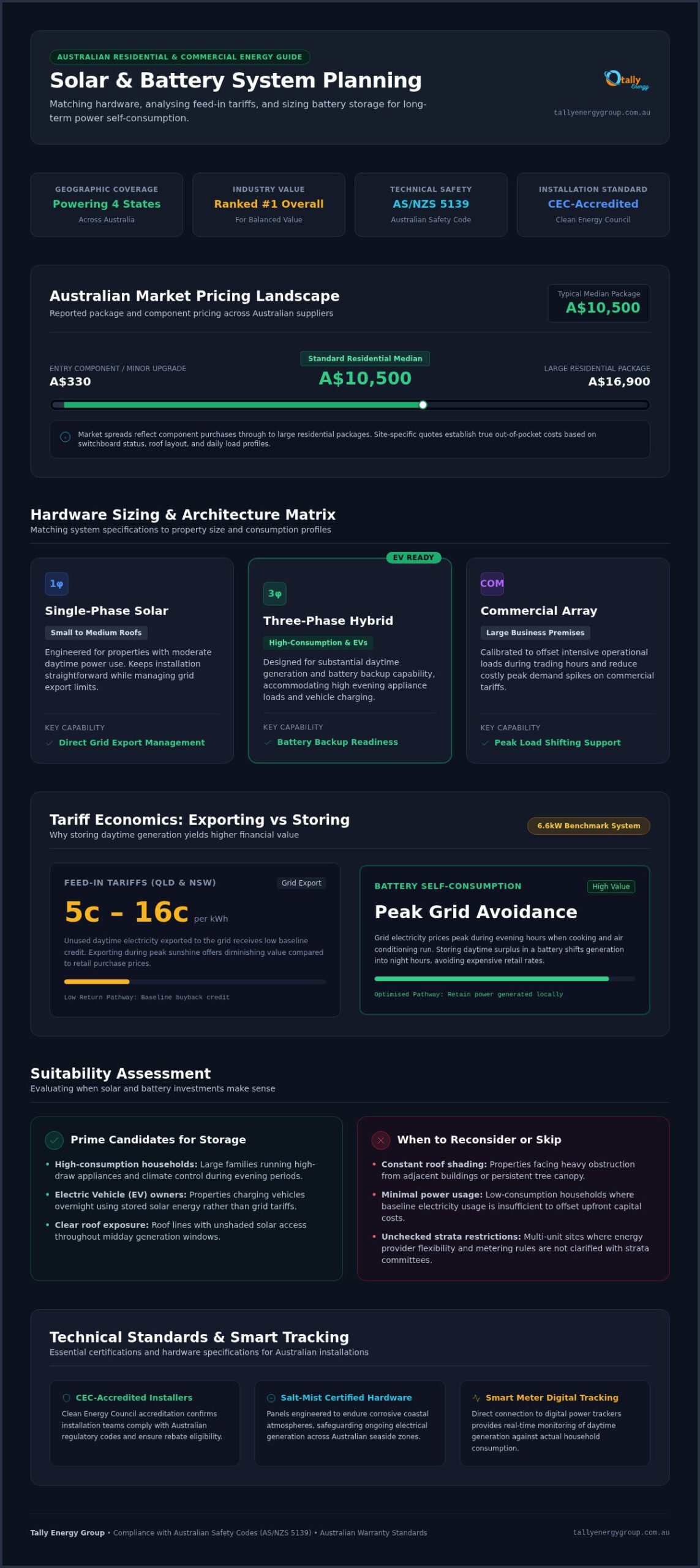
Market listings across Australian suppliers show component and package prices from A$330 to A$16,900, with a median near A$10,500. That spread covers small upgrades through larger residential packages, so you still need a site-specific quote before you treat any figure as your installed cost. Smart energy management helps you match daytime generation with nighttime consumption, directing stored power to evening appliance use so you keep more of what you generate.
Key Takeaways: Smart energy systems lower bills by pairing solar with battery storage to shift daytime generation to expensive evening peak hours, bypassing low feed-in tariffs.
- Australian market listings show a median residential system price of A$10,500 for typical packages.
- Skip it when your roof has constant shade or your home has minimal power usage.
- Best for high-consumption households and EV owners who can maximize self-consumption over grid exports.
- Retailers in QLD and NSW offer feed-in tariffs between 5c and 16c per kWh.
This guide walks the decisions that matter: which hardware fits your roof and habits, whether a battery lifts returns above feed-in alone, what you will pay without hidden fees, and when a basic grid connection remains the wiser call.
Match hardware to your roof, usage and battery plans
Your roof area, daily load and battery timeline decide the right setup long before brand labels matter. Matching hardware from day one avoids early upgrade spend.
Typical situations we size for:
- Small to medium roof, moderate daytime use: a single-phase solar array with direct grid export management keeps the install simple and compliant.
- High-consumption home or EV plans: a three-phase hybrid design with battery backup readiness leaves headroom for charging and evening loads.
- Large business premises: a commercial array focused on peak load shifting trims demand charges where they hurt most.
With clients we see that selecting matching hardware prevents early upgrade costs. High-consumption households across Australia reach strong energy savings through proper system sizing.
Modern smart energy hardware connects directly to your digital power tracker (smart meter) to monitor real-time consumption. You can consult Tally Energy Group for advice on local safety compliance and clean energy standard approvals.
| System Option | Target System Type | Key Feature |
|---|---|---|
| Single-Phase Solar | Small to medium residential roofs | Direct grid export management |
| Three-Phase Hybrid | High-consumption homes & EVs | Battery backup readiness |
| Commercial Array | Large business premises | Peak load shifting support |
Single-phase solar suits smaller residential builds, while three-phase hybrid installations fit property owners planning for electric vehicle charging. Selecting high-quality components supports long-term warranty protection and steady power output for your property.
Understanding your metering setup matters on strata sites. Buyers may need help from their strata committee to understand charges and provider flexibility.
A commenter in the flatchat.com.au thread "Topic: How do we choose a new electricity supplier?":
"Everybody has a slightly different set of circumstances so the best thing you can do is talk to someone on your strata committee and ask them what all the charges mean and how much flexibility you have with changing energy providers." (source)
Navigating shared billing structures and power agreements requires clear communication with your building management before installing energy systems. Understanding these regulatory boundaries helps Australian unit owners pick compliant hardware that matches their specific utility contracts.
Cut peak bills by pairing solar with battery storage
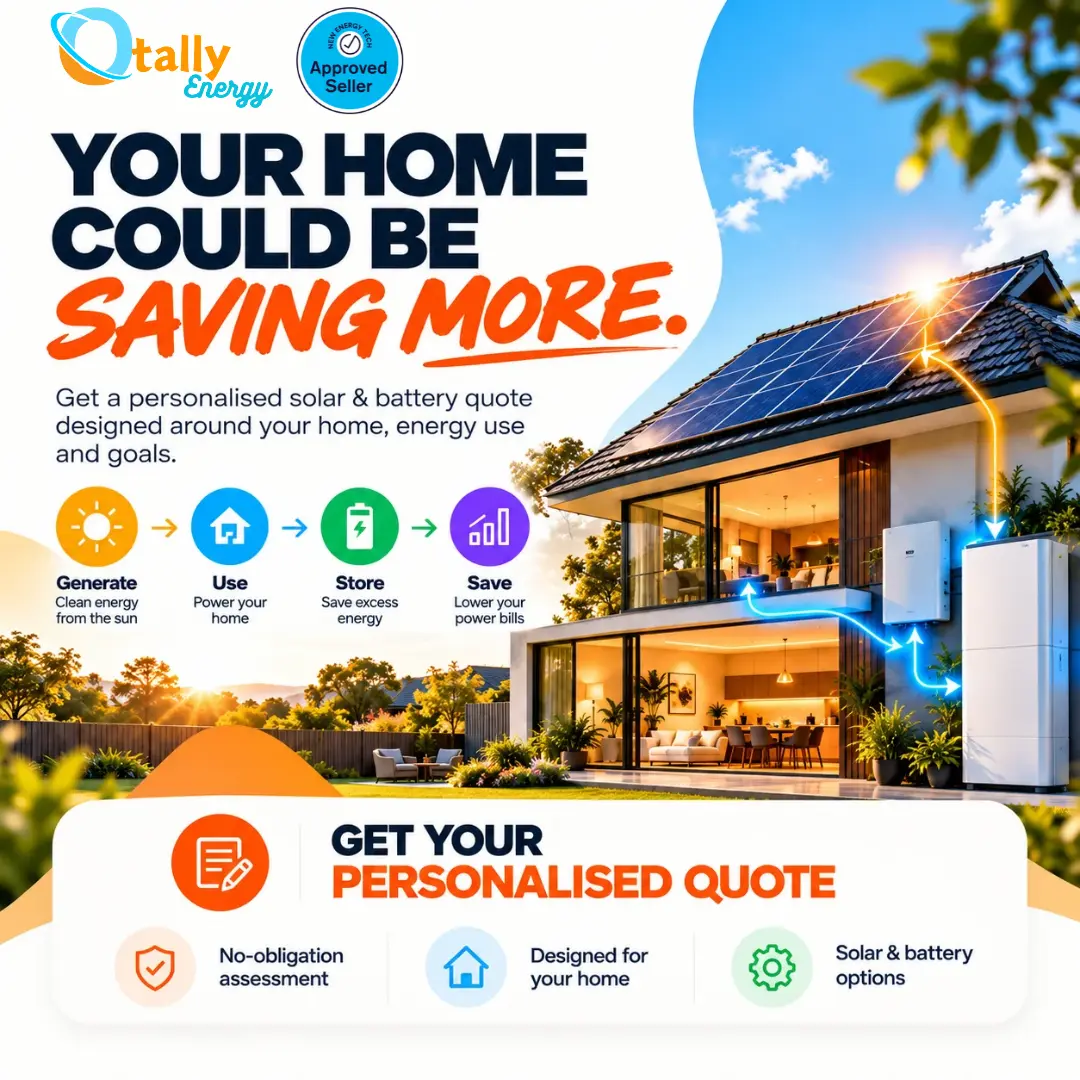
Grid power often costs the most when you cook and run air conditioning at night, which is why high bills cluster in the evening peak. A combined solar and battery system stores excess daytime generation for those hours and lowers those charges directly.
Pairing panels with storage holds free daytime sunshine for later use, so you gain practical energy independence on a daily cycle rather than exporting at low buyback rates. Solar savings show up on the bill you already pay.
See about us for how storing self-generated power keeps supply stable.
We install CEC-accredited, salt-mist certified solar systems engineered specifically to handle harsh coastal conditions. Our team provides fast approvals for straightforward upgrades. Installers are accredited by the Clean Energy Council and comply with Australian standards. Contact us today for a Free Quote.
Tip: Verify that your installer holds Clean Energy Council accreditation to ensure safety and rebate eligibility.
Weigh feed-in tariffs against self-consumption returns
Fixed energy tariffs offer bill predictability, yet variable tariffs can deliver stronger long-term returns as retail power prices move. Local feed-in rates tell you whether exporting surplus beats storing it for evening use.
Energy retailers in QLD offer feed-in tariffs between 5c and 16c per kWh for unused solar power exported to the grid, earning credits on your electricity bill. Energy retailers in NSW offer feed-in tariffs between 5c and 16c per kWh for the same export pathway. Installing a 6.6kW residential system lets you lift self-consumption during peak daytime hours instead of selling power back at baseline rates.
Low daytime buyback rates mean stored excess energy often yields higher financial value than exporting it. Self-storing energy beats exporting when evening retail rates sit well above the feed-in credit.
Tally Energy Group helps households select ideal system sizes to achieve fast payback periods. Ask our Australian team for a Free Quote on your home.
Retail tariff volatility makes locked agreements risky for active daytime consumers.
A commenter in the forum.ovoenergy.com thread "Advice on choosing a new tariff. Fixed or otherwise.":
"Obviously having no insight as to how energy prices will change in these unstable times, it is a gamble either way, so only wanting to sign up for a year at a time, I am thinking of staying with a fixed tariff." (source)
This sentiment illustrates how market volatility creates uncertainty for consumers choosing tariff structures. Securing high self-consumption through local solar storage remains a solid defence against shifting retail energy rates.
See full costs upfront and avoid hidden fees
Unexpected grid bills frustrate homeowners, and clear upfront pricing is how you avoid that trap. In our daily fieldwork we regularly audit total system expenses to prevent unexpected balance charges, including surprise line items such as switchboard upgrades.
For a South Fremantle family in Fremantle, WA, high electricity bills from year-round cooling and a constant home office created severe financial stress. We designed a premium system featuring Tier-1 Jinko panels paired with a Sungrow inverter, choosing salt-mist certified parts to resist harsh coastal conditions. This tailored setup eliminated their power bill surprises while handling high daily usage. Climate-rated gear protects that result over the long term.
Investing in a 10kW solar package supports strong long-term returns when paired with full quote transparency. Smart digital monitors give real-time visibility into daily usage so you can see where power goes. To secure your investment, Tally Energy Group provides strict Australian warranty standards for solar panels. Request a personalised quote to Review your savings figures.
Hearing directly from property owners shows the impact of transparent pricing. Among the Google reviews, a five-star Reviewer wrote:
"Excellent job very smooth process nice and most importantly honest people would recommend this company to all my friends and family."
Honest communication regarding fees supports a stress-free experience for homeowners.
Size and install your system in clear steps
Proper system sizing stops tariff choices from feeling like a price gamble. Once solar output covers your basic consumption patterns, energy options become clearer.
From client work, daily usage reviews stop buyers from over-purchasing hardware. Analysing load profiles balances solar performance without excess spending.
- Assess energy usage with your meter data to measure peak consumption accurately.
- Design system size around actual daytime power demands to lower reliance on grid electricity.
- Select quality hardware like Tier-1 panels and trusted inverters built for harsh local weather conditions.
- Complete professional installation using CEC-accredited solar power systems installers for full safety compliance.
At Sunset Beach in Geraldton, WA, a family struggled with rising energy costs due to high year-round cooling needs. We designed and fitted a premium 10kW system with Tier-1 Jinko panels and a Sungrow inverter. We chose salt-mist certified components alongside high-wind mounting hardware specifically suited for coastal environments. As a result, the household dropped their electricity bills through optimised daytime generation. Proper component matching addresses harsh climate performance.
A South Fremantle family in Fremantle, WA installed a 10kW Jinko system with a Sungrow inverter. The system now generates enough daytime energy to reduce grid reliance, helping the homeowners offset rising Synergy electricity costs while creating a strong foundation for future battery storage and long-term energy independence.
Reach out for your personalised quote and lock in your savings.
When solar and batteries will not pay off for you
Upgrading is not ideal for low electricity users or homes with heavy shading.
Switching tariffs or adding hardware will not lower bills if your roof gets constant shade. System performance drops when trees block sunlight. Low-use homes simply do not generate enough savings to balance initial equipment expenses. If your home’s load profile (daily power usage pattern) is minimal during peak times, a basic grid connection often remains wiser.
Poor solar access stretches your payback timeframe significantly. Compare options carefully before changing your plan. Market package pricing still clusters near the A$10,500 median in current listings, so weak generation makes that outlay harder to recover.
Tally Energy Group provides local expertise across Australia to help you decide. Ask our team for a Free Quote to Review your setup.
Frequently asked questions
How much does a residential solar package cost?
Current Australian market listings place the median package near A$10,500, with wider bands depending on system scale and hardware. Your installed price depends on roof layout, equipment choices and any switchboard work, so a site-specific Free Quote is the figure to plan around.
What are the benefits of a combined solar and battery system?
A combined system stores surplus daytime solar energy to power your home during peak evening hours. This setup reduces grid reliance and helps homeowners offset rising Synergy electricity costs. For example, a recent 10kW system installation in South Fremantle, WA, established a strong foundation for future battery storage and long-term energy independence. Pairing solar panels with CEC-accredited solar batteries keeps your lights on and lifts your self-consumption. Request a Free Quote to find your tailored setup.
How do feed-in tariffs in QLD and NSW affect my returns?
Energy retailers in Queensland and NSW offer feed-in tariffs between 5c and 16c per kWh for exported solar. Those credits lower your quarterly bill, yet storing energy for evening use often beats export when retail peak rates sit higher than the feed-in rate.
How can we support you?
We provide clean energy installations that fully comply with Australian standards and safety codes. Installers hold Clean Energy Council accreditation to support craftsmanship and fast approvals. Systems feature CEC-accredited, salt-mist certified solar components built for harsh coastal conditions. We protect your investment through strict Australian warranty standards. Reach out to get a Free Quote from our local team.
Do I need a CEC-accredited installer?
Yes, if you want rebate eligibility and safety compliance under Australian standards. CEC-accredited, salt-mist certified components and accredited installers keep coastal and inland installs aligned with warranty and approval requirements. Connect with our local experts to evaluate your usage and design a system for your property.
Put these decision points to work on your home
You now have the frame: match hardware to roof and load, compare feed-in credits with self-consumption, demand full cost clarity, and walk away when shade or low use kills the payback. Verified solar and battery solutions lower power bills when those conditions stack in your favour. In 2026, the Tally Energy Group team brings Clean Energy Council accreditation to each project. We handle fast approvals, compliance standards, and triple warranties for peace of mind.
Ready for reliable energy independence? Request a Free Quote today at Tally Energy Group Shop.








Comments are closed