


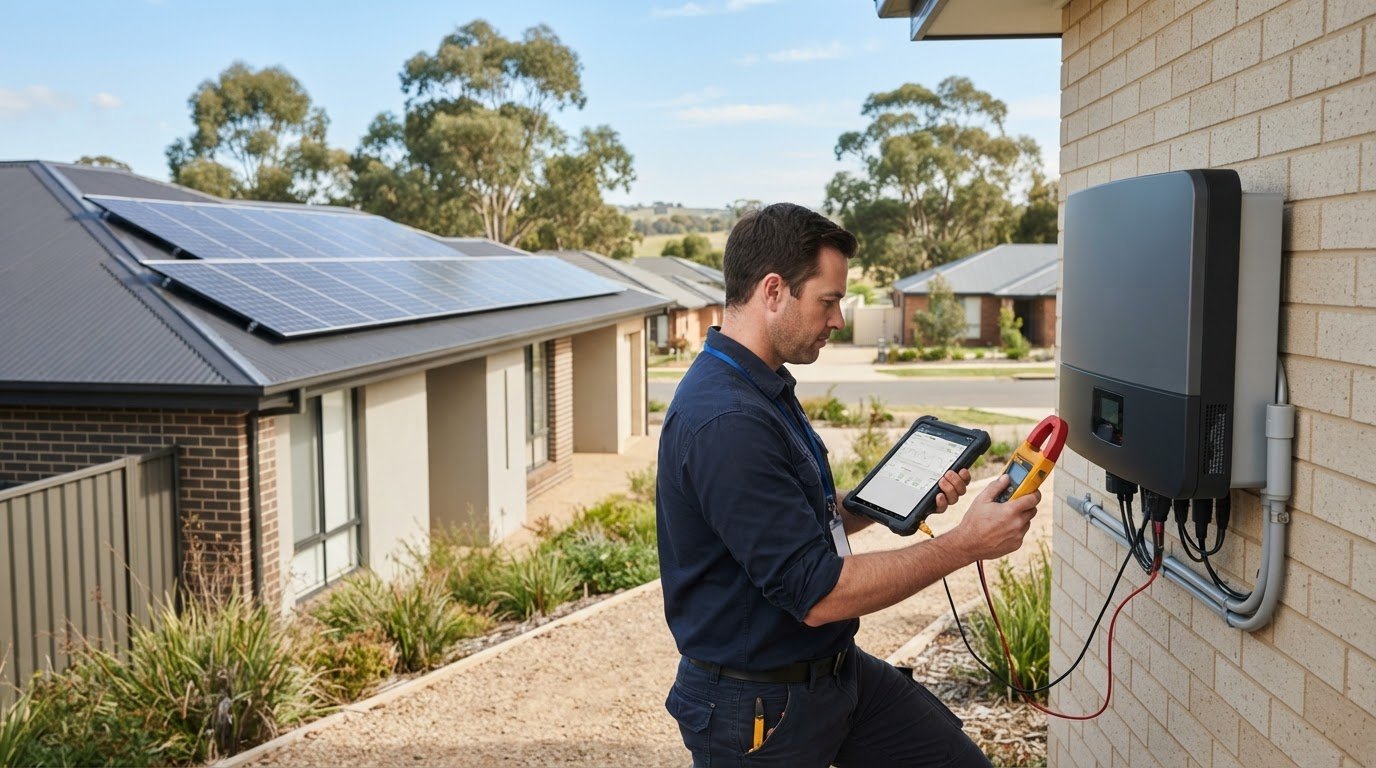
A solar inverter can stop working well before your panels reach the end of their service life, but a fault doesn’t automatically mean the whole system needs replacing. Understanding solar inverter lifespan and replacement cost expectations starts with looking at the inverter’s condition, warranty and compatibility with the equipment already on your roof.
It’s reasonable to want a clear answer when warning lights appear, an error code shows up or your monitoring app records a drop in generation. The right next step may be a repair, a like-for-like replacement or a system upgrade. Age matters, but it’s only one part of the decision.
This guide explains the signs and records that can help assess inverter condition, the factors that influence repair or replacement costs, and what to consider before choosing a new unit. We’ll also cover why panels, wiring, battery plans and grid connection requirements need to be considered together. That way, you can approach a system assessment with a clearer picture of your options and the next steps.
Key Takeaways
- Use your inverter’s age as a guide, not a fixed replacement deadline. Its model, operating conditions and maintenance history can all affect service life.
- Warning lights, error messages and unexpected monitoring changes can signal a fault, but weather, shading and household use may also affect solar output.
- Compare repair and replacement by looking at the fault, the condition of the wider system and your future energy needs.
- Solar inverter lifespan and replacement cost expectations depend on more than the unit itself: equipment, system design, site work and project scope all matter.
- Gather system records and note any symptoms before assessing compatibility with your existing panels, wiring and intended system configuration.
Solar inverter lifespan: what Australian homeowners can reasonably expect
An inverter has a different job and ageing pattern from the solar panels it connects to. It converts the panels’ direct current electricity into alternating current that household appliances can use. The Solar inverter also manages key functions that help the system operate. Its condition matters, but age alone doesn’t tell you whether it needs attention.
Why solar inverters do not all age at the same rate
Inverter service life can vary with the model, its design and the conditions in which it operates. Heat, direct sun exposure and limited airflow may place more strain on equipment. Installation quality and ongoing care can also affect how it performs over time. These factors mean two inverters installed in the same year may not be in the same condition today.
Keep the inverter’s surroundings clear and pay attention to changes in its operation, but don’t assume a drop in solar generation proves the inverter is failing. Household electricity use, weather and shading can also change the amount of energy you see. A useful assessment looks at the inverter alongside the panels, wiring and system history.
What a typical lifespan estimate does, and does not, tell you
An inverter’s lifespan is an estimate of how long it may operate, not a guaranteed replacement date. It isn’t the same as a manufacturer’s warranty period, either. Warranty coverage and conditions depend on the specific product documentation, so check the paperwork for your installed unit rather than relying on a general lifespan estimate.
Likewise, a system’s age doesn’t prove that its inverter has a fault, and a system producing less power than expected doesn’t identify the cause by itself. Look at monitoring records over time and note any changes or alerts. These details can help distinguish a gradual change in output from an inverter issue that needs further assessment.
If you’re comparing system sizes as part of a future upgrade, see the 6.6kW solar system guide. The right system design depends on your household’s needs and the equipment already in place. That context is useful when weighing solar inverter lifespan and replacement cost expectations: replacement planning should consider the whole system, not just the inverter’s age.
Solar inverter warning signs: separate a fault from normal performance changes
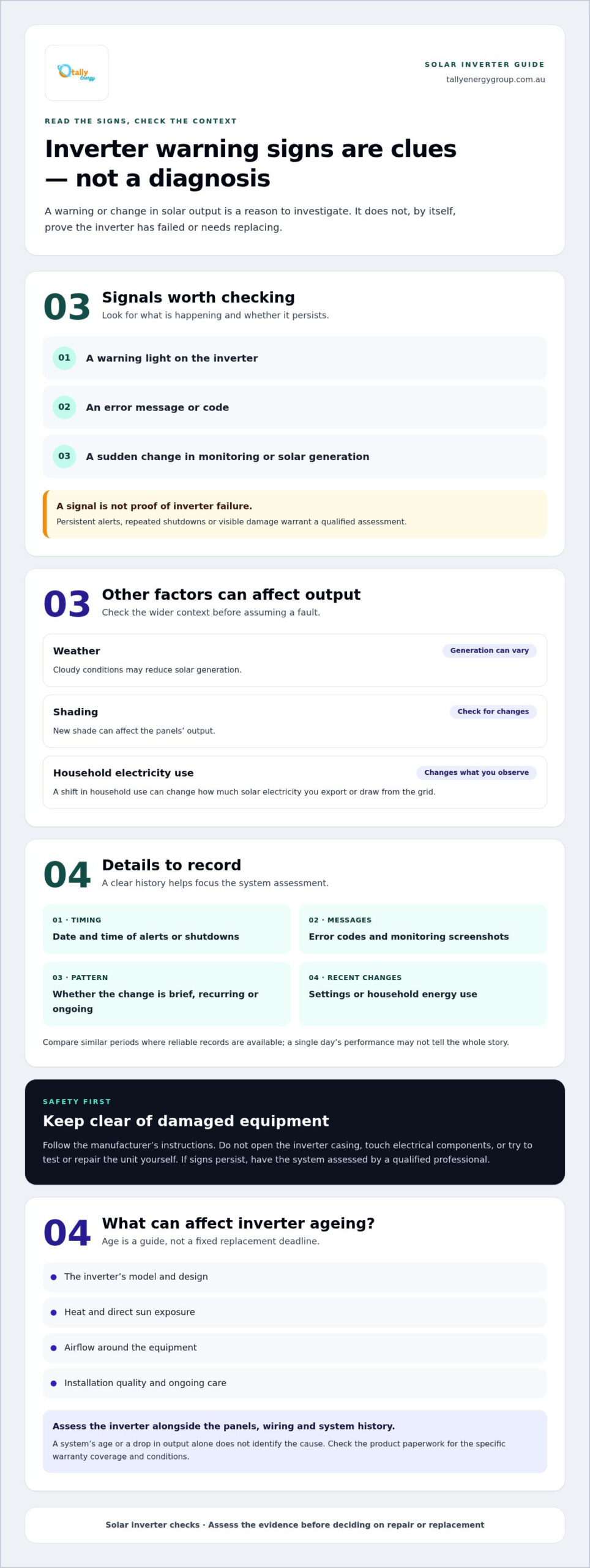
A warning light, an error message or a sudden change in your monitoring app can be concerning, but none of these signs alone confirms that the inverter has failed. Check what the system is reporting and look for a pattern before drawing conclusions. Weather, shading and changes in household electricity use can all affect the solar output you observe.
Which inverter symptoms deserve prompt attention?
Persistent alerts, repeated system shutdowns or visible damage are reasons to seek a qualified assessment. Note the exact error message or code, when it appeared and whether the system stopped producing power. If there’s visible damage, keep clear of the equipment.
Follow the manufacturer’s instructions for your inverter, but don’t open the casing, touch electrical components or try to test or repair the unit yourself. An alert may relate to an issue that can be investigated without replacing the inverter, so avoid treating every warning as a replacement decision.
How to check system performance before assuming the inverter has failed
Start with the information available through your monitoring app or display. If you have reliable records, compare similar periods rather than judging performance from a single day. Note any recent changes to system settings, household energy use or access to monitoring, as these can affect what the data shows or how you interpret it.
A change in solar output is a reason to investigate, not proof of an inverter fault. Cloudy conditions may reduce generation, while new shade can affect the panels’ output. A shift in household use may change how much solar electricity you export or draw from the grid, without indicating that the inverter is faulty.
- Record the date and time of alerts or shutdowns.
- Save error codes and screenshots from your monitoring app.
- Note whether the change is brief, recurring or ongoing.
- Write down any recent changes to settings or household use.
These records can help an assessment focus on the issue and distinguish an inverter fault from other changes affecting system performance. They’re also useful context when considering solar inverter lifespan and replacement cost expectations, because a clear diagnosis can help avoid replacing equipment unnecessarily.
If the signs persist, a system assessment can consider the inverter alongside the rest of your setup. Explore a tailored solar system assessment as a practical next step.
Solar inverter repair or replacement: compare the whole-system implications
A repair-versus-replacement decision should start with the fault, then widen to the system around it. An assessment can help establish whether the problem is isolated to the inverter or linked to other equipment, and whether a repair would keep the system suited to your needs.
| Factor | Repair may be worth assessing when… | Replacement may be worth assessing when… |
|---|---|---|
| Fault scope | The fault is defined and appears addressable. | Faults recur or the issue affects broader system operation. |
| Compatibility | The existing inverter remains suitable for the panels and system configuration. | Compatibility limits affect system operation or planned changes. |
| System condition | The wider system is in suitable condition to keep operating with a repaired inverter. | Other system changes may need to be considered alongside the inverter. |
| Future needs | Your current setup still fits your household’s plans. | You’re considering changes such as adding battery storage or adjusting system capacity. |
When an assessment may favour repair
Repair may be a reasonable option if assessment identifies a specific, addressable fault and the inverter remains compatible with the rest of the system. The decision also depends on the parts and labour involved, the unit’s age and the terms of any applicable warranty. Those details are product- and project-specific, so a repair outcome or cost shouldn’t be assumed before the issue is diagnosed.
When replacing the inverter may make more sense
Replacement may be considered if faults keep returning, the existing inverter limits compatibility, or wider system changes are being planned. Your household’s current and future energy use matters too. If battery integration is on your radar, the inverter choice should be considered as part of the system design, not as a standalone swap. The Australian solar battery storage guide can help you understand how storage may shape those plans.
There’s no single rule that makes replacement the right choice at a particular age. A qualified assessment should consider the fault, existing panels and wiring, system condition, warranty information and intended configuration. That evidence-based approach helps make solar inverter lifespan and replacement cost expectations more relevant to your actual setup, without assuming that every fault calls for a new unit.
For a system-level assessment of your solar setup and future needs, request a tailored solar quote.
Solar inverter replacement cost expectations: understand the factors before budgeting
There isn’t one reliable price that applies to every inverter replacement. The total depends on the equipment selected, how it fits the existing system, any site work required and what the project includes. A product-only figure may leave out installation and other work needed to complete the replacement, so compare the full scope rather than the unit price alone.
What can change the installed replacement cost?
The inverter type and capacity need to suit the system’s verified requirements, including its existing panels and configuration. Choosing a unit on price alone may not account for compatibility. A system assessment helps establish what equipment is appropriate before costs are finalised.
Site requirements can also affect the scope. Existing wiring or the switchboard may need attention, but an upgrade shouldn’t be assumed without an assessment. Labour and commissioning, the checks and setup involved in putting the replacement system into operation, should be clear in the project scope so you can see what the quoted amount covers.
If you’re reviewing panels as part of a broader system plan, the Australian solar PV panel buying guide offers useful component-selection context. The inverter and panels need to work as part of a compatible system, not just meet separate product preferences.
How to compare replacement quotes transparently
Compare quotes on a like-for-like basis. Check that each one identifies the proposed inverter, installation work and any commissioning or system checks included. Note exclusions too. If one quote includes site work and another doesn’t, their totals won’t represent the same project.
Look for warranty terms that apply to the specific equipment and work, and read the product documentation so you understand what each covers. Don’t assume that a product warranty automatically covers installation or other project costs. A clear quote should set out the scope and relevant terms, with any additional work identified separately.
- Confirm the equipment is selected for your existing system.
- Compare installation, commissioning and system checks.
- Review exclusions and any possible site work.
- Check the stated warranty terms for equipment and work.
These details make solar inverter lifespan and replacement cost expectations more useful for budgeting, without relying on a generic price range. The project assessment is what turns broad cost factors into a quote for your system.
Request a tailored solar quote to discuss replacement scope and system compatibility.
Plan solar inverter replacement around compatibility and current requirements
A replacement should suit the solar system you have and the way you expect to use it. Before choosing equipment, gather the available records and have the panels, wiring, inverter and intended system configuration considered together. This makes it easier to compare suitable options and understand what the project involves.
Information to gather before a system assessment
Collect what you can before discussing the system. You don’t need to diagnose the fault yourself. Useful records include:
- The inverter’s make and model, plus any installation records.
- Available warranty documents and product information.
- Monitoring screenshots, error messages and the dates symptoms appeared.
- Notes about planned changes to household energy use or battery storage.
These details can help clarify the existing setup and your priorities. If records are missing, share what you do have; a system-level assessment can still consider the equipment and project scope.
Plan the decision in clear stages
- Gather system records. Collect inverter details, installation paperwork and available warranty documents.
- Document symptoms. Record alerts, error messages and monitoring changes with dates.
- Assess compatibility. Consider how a replacement inverter will work with the existing panels and wiring, and whether it suits your intended system configuration.
- Compare project scope. Review the proposed equipment, included work, system checks and any exclusions side by side.
- Plan installation. Agree on the replacement approach based on the assessment and the system’s requirements.
Grid connection is another part of equipment selection. CSIP-AUS inverter requirements are being introduced across Australian networks, but the requirements that apply can depend on the connection location and project circumstances. Their relevance should be assessed for the specific replacement rather than assumed to be identical everywhere.
How Tally Energy Group can support a system-level decision
Tally Energy Group designs and installs solar systems, with inverter planning considered in the context of existing equipment and your household’s needs. Clean Energy Council accreditation and attention to Australian safety-code compliance support a considered approach to system design and installation.
Clear records help, but you don’t need every answer before taking the next step. If you’re weighing solar inverter lifespan and replacement cost expectations for your home, a project-specific assessment can help set out the compatible options and scope. Request a free solar quote to discuss your system and what may suit it.
Take the next step with a clear system plan
Inverter age can help inform your decision, but it doesn’t set a replacement date. Warning lights, error messages or changes in monitoring are useful clues, not a diagnosis. A careful assessment can help identify whether the issue is isolated and whether repair or replacement suits your existing panels, wiring and future energy needs.
For useful solar inverter lifespan and replacement cost expectations, look beyond the unit itself. The equipment, compatibility, site work and installation scope all affect the project. Keep your system records and fault notes handy so the assessment can start with the details of your setup.
Tally Energy Group designs and installs solar systems for residential and commercial customers, with Clean Energy Council accreditation. If you’re ready to discuss a compatible way forward, request a free solar quote.
A clear plan can help you make a confident decision for your system and what comes next.
Frequently Asked Questions
How long does a solar inverter last?
A solar inverter’s lifespan is an estimate, not a guaranteed replacement date. Its actual condition can depend on the equipment, installation and operating environment. Check the inverter documentation and any available system records rather than relying on age alone. If performance changes or alerts persist, record the details and arrange an assessment. This can help establish whether the issue needs attention and whether repair or replacement is appropriate.
How much does it cost to replace a solar inverter in Australia?
There’s no single replacement cost that suits every solar system. The installed cost depends on the inverter selected, its compatibility with existing equipment, any site work required, and the labour and commissioning included in the project. A product-only price may not cover everything needed to complete the replacement. Compare project-specific quotes by reviewing equipment details, inclusions, exclusions and applicable warranty terms.
Can I replace a solar inverter without replacing the panels?
It may be possible to replace the inverter while keeping your existing panels, but compatibility needs to be assessed. The proposed inverter must suit the panels and system configuration, intended operation and applicable grid-connection requirements. Don’t assume any inverter will work with an existing array. A system assessment can consider the equipment already in place, identify suitable options and clarify whether additional work may be needed.
What are the signs that a solar inverter needs replacing?
Persistent error messages, repeated shutdowns, visible damage or unexpected monitoring changes may warrant an assessment, but they don’t confirm that replacement is needed. Weather, shading and household electricity use can also affect observed solar output. Record alerts and relevant performance information, including dates, and follow the manufacturer’s safety instructions. Don’t open the inverter or touch electrical components. An assessment can help establish whether the issue relates to the inverter or another part of the system.
Is it better to repair or replace a solar inverter?
The best option depends on the fault, equipment condition, warranty terms, repair scope and compatibility with your solar system. If an assessment identifies a defined, addressable fault, repair may be worth considering. Repeated issues or wider system changes may make replacement worth assessing instead. Compare the full repair and replacement scopes, including labour and equipment, rather than deciding based on age or an initial product price alone.
What happens if my solar inverter stops working?
If the inverter stops working, it may no longer convert solar electricity into power for household use as expected. The effect depends on the fault and system design. Check your monitoring information and record any displayed error, but don’t open or touch electrical equipment. Follow the manufacturer’s instructions and arrange a qualified assessment. This can help identify the fault and determine whether repair or replacement is suitable for your system.
Do current Australian inverter requirements affect replacement?
CSIP-AUS inverter requirements may be relevant to a grid-connected replacement, but the requirements that apply depend on the project and its connection circumstances. Don’t assume the same settings or requirements apply to every system. A replacement assessment should consider the existing panels and configuration, the proposed inverter and current applicable guidance. This helps ensure equipment selection and installation planning reflect the requirements relevant to your project.









Comments are closed