



A home solar array is a precision-engineered power plant, and its safety is determined by the quality of its design rather than just the brand of the panels. It’s completely natural to feel a sense of unease when hearing stories about electrical faults or “solar cowboys” who disappear as quickly as they arrived. You want to lower your electricity bills and contribute to a sustainable future, but you shouldn’t have to trade your family’s peace of mind to achieve those goals. Investing in a home solar array should be a milestone of security, not a source of ongoing worry.
This guide cuts through the noise to reveal the truth about solar safety and performance in the 2026 Australian market. You’ll learn how to navigate the latest rebate changes, identify the red flags of unreliable installers, and understand the new national cyber security rules for smart energy devices. We’ll walk you through the essential steps to ensure your system is a safe, high-performing asset that protects your home while delivering the financial freedom you’re looking for.
Key Takeaways
- Understand why a home solar array is a precision-engineered energy system where safety depends on integrated design rather than just the brand of the panels.
- Discover why a 6.6kW system remains the “sweet spot” for many Australian families, and identify the specific energy needs that make a 10kW or 13kW system a better long-term investment.
- Stay ahead of 2026 regulations, including new cyber security rules for smart devices and updated installation standards that protect your home from electrical faults.
- Recognise the warning signs of “solar cowboys” and understand why Clean Energy Council (CEC) accreditation is a non-negotiable requirement for protecting your asset.
- Learn how a professional four-step design process ensures your solar investment remains a secure, high-performing asset for the life of the system.
Understanding the Home Solar Array: More Than Just Panels on a Roof
A home solar array is far more than a collection of glass rectangles bolted to your tiles. It’s a sophisticated, integrated energy system designed to function as a single unit. Choosing an ‘array’ describes a precision-engineered rooftop solar power system where every component works in perfect harmony. Unlike off-the-shelf bundles that often use mismatched components to lower the price, a professionally designed array is tailored to your home’s specific orientation, shading profile, and energy needs. This distinction is vital for your home insurance. Insurers view a documented solar array as a permanent, high-value asset, which can simplify claims if storm damage occurs. Treating your installation as a holistic power plant ensures that the safety protocols of the inverter match the output capacity of the panels.
The Components of a High-Performance Array
To build a system that lasts 25 years, you need three core pillars. First, Tier 1 Solar PV panels are essential. These aren’t just about efficiency; they represent the manufacturer’s financial stability and commitment to build quality. Second, the solar inverter acts as the brain. It manages the energy flow and ensures the system shuts down safely during a grid fault. Finally, high-quality mounting and racking kits are the unsung heroes. In Australia, your array must withstand intense UV radiation and high wind loads without compromising your roof’s structural integrity. Cheap mounting hardware is a common point of failure that can lead to roof leaks or, in extreme cases, panels becoming detached during storms.
How Solar Energy Powers Your Modern Australian Home
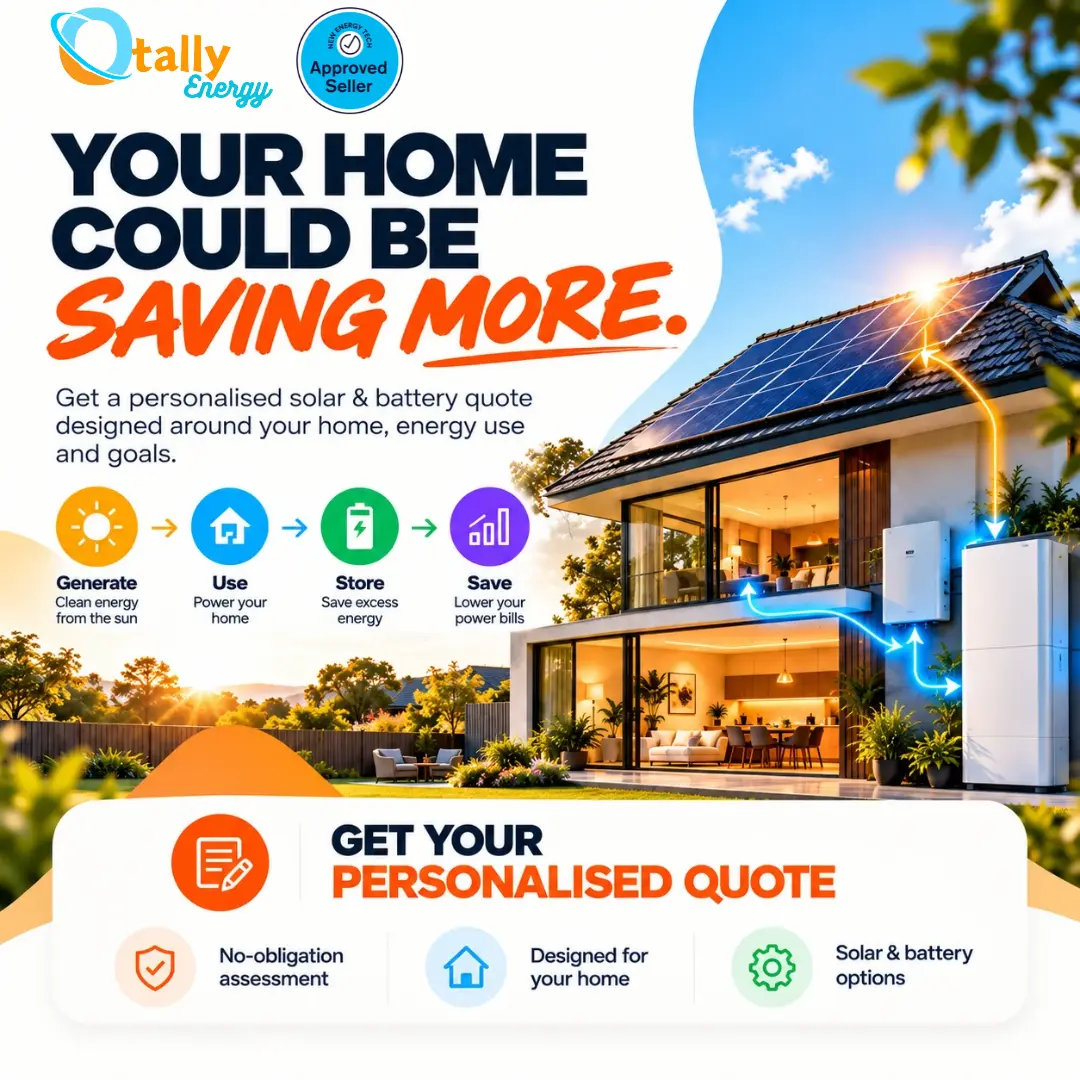
The science is simple but the implementation must be precise. Your panels capture sunlight and create Direct Current (DC) electricity. Your inverter then converts this into Alternating Current (AC). This is what your fridge, lights, and air conditioner use. With current feed-in tariffs in Australia typically ranging between 4c and 8c per kWh, the goal has shifted toward self-consumption. This means using your solar power while the sun is shining rather than exporting it for a small credit. Modern smart monitoring allows you to track this output in real-time. This gives you the data needed to time your appliance use and maximise your financial return.
Debunking Home Solar Array Myths: Safety, Fire Risks, and Durability
Fear of fire is the most common concern for families considering a home solar array. Statistically, solar panels are remarkably safe. Most reported incidents aren’t caused by the panels themselves but by poor installation practices or sub-standard components like aging DC isolators. A professionally designed system uses high-quality circuit protection to mitigate these risks before they ever become a hazard. Beyond fire safety, there’s the question of roof integrity. A standard 6.6kW system adds about 400kg to your roof. While this sounds heavy, a modern Australian home is built to handle much more, provided the mounting system is engineered correctly for the specific roof pitch. Falling into the “cheap solar” trap often means sacrificing these engineering checks, which is where structural risks actually begin.
Fire Safety and Electrical Standards in 2026
Australian safety regulations have tightened significantly over the last decade. By 2026, standards have evolved to mandate smarter circuit protection and more robust labeling requirements to ensure emergency services can safely isolate the system. The primary danger to your home isn’t the technology; it’s the “Solar Cowboy” who cuts corners on wiring or uses unbranded components that haven’t been tested for our conditions. AS/NZS 5033 serves as the definitive standard for the safe installation and safety requirements of photovoltaic arrays in Australia. Ensuring your installer adheres to these rules is the only way to protect your family’s asset. If you’re unsure about your current setup, it is wise to review your system design with a professional who prioritises safety over a quick sale.
Weather Resistance: Hail, Wind, and the Australian Sun
Tier 1 panels undergo rigorous testing to survive the harsh Australian climate. This includes impact tests with high-velocity hail and stress tests for extreme wind loads. For those living near the coast, salt-mist corrosion is a genuine threat that can degrade poor-quality frames in just a few years. A high-performance home solar array uses anodised aluminium and corrosion-resistant mounting to prevent this degradation. Professional designers don’t just guess; they calculate the specific wind pressures based on your local terrain and roof height to ensure the panels stay exactly where they belong, even during a summer cyclone. This level of detail separates a long-term asset from a short-term liability that might fail when the weather turns.
Sizing Your Array for Maximum ROI: From 6.6kW to 13kW
Choosing the right capacity for your home solar array is a strategic decision that dictates your financial return for the next two decades. It’s no longer just about filling the available roof space. Instead, you must balance your current daytime energy use with your future plans for electrification. Most Australian households find themselves choosing between a standard 6.6kW solar system and larger 10kW or 13kW configurations. Sizing correctly prevents the “solar regret” that occurs when a system is too small to handle new additions like a pool heat pump or an electric vehicle.
The 6.6kW Sweet Spot Explained
The 6.6kW solar system has become the national benchmark for a specific reason. Most residential properties in Australia have a single-phase electrical connection, which typically limits solar inverters to a 5kW export capacity. By installing 6.6kW of panels on a 5kW inverter, you maximise the “overclocking” effect. This ensures your system reaches its peak output earlier in the morning and maintains it later into the afternoon. This configuration also takes full advantage of the Federal Government’s Small-scale Renewable Energy Scheme (SRES) rebate, which provides a significant upfront incentive for systems under 100kW. On a clear spring day, a 6.6kW array can produce roughly 25 to 30kWh of energy, which is more than enough for the average family’s daily needs if managed correctly.
Future-Proofing with 10kW and 13kW Systems
While 6.6kW is the entry point, the shift toward electric vehicles (EVs) is changing the ROI calculation. An EV can easily consume 30kWh to 40kWh for a full charge. If you plan to charge at home, a 10kW or 13kW home solar array becomes essential to avoid drawing expensive power from the grid. Larger arrays also provide the headroom required for solar battery packages. With feed-in tariffs now sitting between 4c and 8c per kWh, the financial goal is no longer to sell power back to the retailer. You want to generate enough surplus during the day to fill a battery and run heavy appliances like ducted air conditioning. A 13kW array ensures that even on cloudy winter days, your system generates enough power to cover your base load. We help you navigate this during our four-step solar journey, ensuring the design matches your projected energy profile.

Navigating the Australian Solar Market: Avoiding ‘Solar Cowboys’
The Australian solar industry has seen rapid growth, but this has also invited “Solar Cowboys” into the market. These are unscrupulous operators who use high-pressure sales tactics and substandard components to offer prices that seem too good to be true. They often vanish once the installation is complete, leaving families with “orphaned” systems that have no technical support or valid installation warranty. Protecting your home solar array starts with choosing a partner that prioritises longevity over a quick sale. Always verify that your provider uses Clean Energy Council (CEC) Accredited Designers and Installers, as this is a mandatory requirement for safety and for claiming federal incentives.
Red flags are easy to spot if you know where to look. Be wary of door-to-door salespeople who demand a signature on the spot or companies that refuse to provide a site-specific engineering plan. Warranties also require a close look. A 25-year performance warranty on panels is standard, but it’s the 10 to 15-year product warranty and the installer’s own workmanship guarantee that truly protect you. Under Australian Consumer Law, you have rights regardless of what an installer’s contract says, but those rights are difficult to enforce if the company no longer exists. To ensure your investment is secure, you should start your solar journey with a national provider that has a proven track record of local support.
The 4-Step Journey to a Safe Solar Installation
A safe installation follows a methodical path. First, a personalised consultation identifies your specific energy goals; any quote provided without looking at your actual power bills is a danger sign. Second, custom engineering and design maps the home solar array to your roof’s unique structural points and shading profile. Third, professional solar panel installation by CEC-accredited technicians ensures every DC isolator and cable run meets 2026 safety standards. Finally, active monitoring and long-term support ensure the asset performs exactly as promised for its 25-year lifespan. This structured approach eliminates the guesswork and ensures your system remains a high-performing asset rather than a liability.
Understanding Australian Solar Rebates and Incentives
The Small-scale Technology Certificate (STC) scheme remains a cornerstone of solar affordability in 2026. This federal incentive provides a rebate of approximately $400 to $600 per kW, though it continues to reduce annually until its scheduled end in 2030. State-based incentives, such as the Victorian rebate of up to $1,400, can often be stacked with federal credits to further lower costs. Navigating these requires a transparent partner who explains the value clearly. Government rebates are typically applied as an upfront discount on the total cost of your system by your installer. Avoid any provider that tries to hide these values in a “special one-day-only” price; transparency is the hallmark of a professional installer.
The Tally Energy Approach: Designing a Sustainable Future for Your Home
Tally Energy Group operates as a seasoned professional in a market that is often confusing and overcrowded. We prioritise your long-term success by focusing on transparency and protective guidance. Our national presence isn’t just about scale; it’s about providing reliable support regardless of where you live in Australia. We understand that a home solar array is a significant investment for any family. That’s why we’ve developed our four-step solar journey to ensure every detail, from the initial design to the final grid connection, is handled with precision. This process shields you from the “cheap solar” traps and guarantees that your system remains a high-performing asset for decades.
Why Professional Design Trumps Cheap Components
Professional design is the foundation of true energy independence. We exclusively use Tier 1 hardware and CEC-accredited designers to create systems that maximise yield while maintaining the highest safety standards. We don’t believe in one-size-fits-all solutions. Instead, we customise every home solar array to account for your roof’s specific engineering needs and your family’s future energy profile. This includes expert integration of Solar Battery Packages for those looking to achieve total energy independence. Our goal is a partnership that extends far beyond the day of installation, providing you with the peace of mind that your energy future is secure.
Ready to Secure Your Energy Future?
Taking the first step toward energy security is simple and transparent. You can use our online estimator to get an immediate sense of what’s possible for your property. During your first consultation, a Tally Energy Group expert will review your energy bills and conduct a detailed site analysis to provide a clear, no-obligation engineering plan. We’ll explain the technical details in everyday language so you can make an informed decision without the stress. Organise your free home solar array quote with Tally Energy Group today and start building a safer, more sustainable future for your home.
Investing in a Safer, Smarter Energy Future
Your home solar array is more than just a tool for lower bills; it’s a precision-engineered asset that deserves expert care. We’ve explored how a holistic design approach and adherence to the latest 2026 safety standards can eliminate the risks associated with “solar cowboys.” By prioritising high-quality Tier 1 hardware and professional engineering, you ensure your system remains a reliable power plant for your home for decades to come.
Choosing the right partner is the final piece of the puzzle. With a national Australian support network and a team of CEC Accredited Designers and Installers, Tally Energy Group provides the security and expertise you need. We back every installation with a Tier 1 solar hardware guarantee, ensuring your peace of mind is never compromised. This commitment to quality means your investment is protected against the harsh Australian climate and shifting market conditions.
Ready to take control of your energy costs without the stress? Start your 4-step solar journey with a free quote from Tally Energy today. You can build a sustainable, self-sufficient home that protects your family and your finances. The path to a cleaner energy future is clear, and we’re here to guide you every step of the way.
Frequently Asked Questions
Is a home solar array still worth it in Australia in 2026?
A home solar array remains one of the most effective ways to combat rising energy costs in 2026. With retail electricity prices often ranging between 30c and 45c per kWh, the savings from generating your own power far outweigh the reduced feed-in tariffs. While the financial export rewards have changed, the value of self-consumption is at an all-time high. Australia continues to lead the world in solar adoption because the return on investment remains strong for most households.
How much does a 6.6kW solar system cost with the rebate?
The final cost depends on the quality of hardware and the complexity of your roof. Federal STC rebates provide a significant incentive, often between $400 and $600 per kW, which reduces the upfront investment. While industry averages vary, you should focus on the total value and safety of the installation rather than just the lowest price. A 6.6kW solar system is a long-term asset, and the rebate is typically applied as an immediate discount by your installer.
Can a home solar array cause roof leaks or structural damage?
A professionally designed home solar array won’t damage your roof. Installers must follow strict AS/NZS 5033 standards to ensure the mounting system is waterproof and structurally sound. Problems only arise when “solar cowboys” use cheap racking or fail to account for local wind loads. Correct installation actually provides a layer of protection for your tiles or tin from direct UV exposure and hail impact, provided the structural engineering is handled correctly.
What is the difference between Tier 1 and ‘cheap’ solar panels?
Tier 1 panels come from manufacturers with high financial stability and advanced automated production lines. This ensures every panel is tested for micro-cracks and UV resistance before it leaves the factory. Cheap panels often use inferior sealants and frames that can corrode in the salt-mist conditions common in coastal Australia. Investing in Tier 1 hardware guarantees that your manufacturer warranty will be honoured if a fault occurs ten or fifteen years from now.
Do I need a battery with my home solar array to save money?
You don’t strictly need a battery, but it significantly increases your savings by boosting self-consumption. Because feed-in tariffs are currently between 4c and 8c per kWh, it’s more profitable to store your surplus energy than to sell it back to the grid. A battery allows you to use your solar power during the evening peak when electricity is most expensive. This setup is the best way to achieve total energy independence and lower your reliance on the grid.
How long do solar panels actually last in the Australian sun?
High-quality solar panels are designed to last for 25 years or more. While they may experience a very slight reduction in efficiency over time, Tier 1 panels usually come with a performance guarantee of at least 80% after two decades. The Australian sun is harsh, so choosing hardware with high UV ratings and robust anodised aluminium frames is essential. Regular professional checks ensure the electrical components and isolators remain safe throughout the system’s life.
What happens to my solar array during a power outage?
Most standard systems will shut down during a power outage to protect workers repairing the grid. This safety feature, known as anti-islanding, prevents your panels from sending electricity into a potentially damaged line. If you require power during a blackout, you’ll need a solar battery package with a dedicated backup circuit. This allows your home to operate independently from the grid when the local network goes down, keeping your essential appliances running safely.
How do I claim the solar rebate for my new installation?
Claiming the federal STC rebate is a straightforward process that is almost always managed by your installer. They calculate the number of certificates your system generates based on its size and location, then apply that value as an upfront discount on your quote. You simply need to sign the compliance documents after the installation is complete. This system ensures you don’t have to wait for a government payout to see the financial benefit of your new system. Before signing any contract, reviewing a comprehensive solar panel installation checklist can help you verify your installer is meeting all 2026 compliance requirements.








Comments are closed