



Could a solar quote show the right STC count but still leave you unsure about the discount? The small scale technology certificates calculation formula can look complicated when terms such as “deeming period” and “postcode zone rating” appear without explanation.
The certificate count and the dollar reduction are related, but they are not the same figure. Knowing how each is worked out can help you compare quotes and identify which assumptions need checking.
This guide explains the 2026 formula, what each input means and why your installation postcode and timing affect the estimate. You’ll learn how to check the calculation against current official information, distinguish the number of STCs from their value, and ask your installer to itemise both the certificate estimate and upfront reduction. That way, you can assess what the figures show before deciding whether a solar quote suits your home.
Key Takeaways
- Understand the small scale technology certificates calculation formula and what each input represents.
- Check system details, installation postcode and current eligibility rules before relying on an STC estimate.
- Separate the certificate count from the upfront dollar reduction shown in your solar quote.
- Ask your installer to itemise the STC estimate and explain how the quoted reduction was calculated.
- Use the checklist in this guide to prepare for a clear conversation about your solar system quote.
What are Small-scale Technology Certificates, and how can they reduce a solar system’s upfront cost?
A solar quote may show a lower upfront price because eligible Small-scale Technology Certificates (STCs) are assigned a value and applied as a discount. STCs are created under the Small-scale Renewable Energy Scheme (SRES), a federal program that supports eligible small-scale renewable energy systems. For current eligibility and calculation guidance, check the Clean Energy Regulator’s information rather than relying on a general overview alone.
What does an STC represent?
An STC is a certificate in the scheme, not cash automatically paid to every household. Whether a system can create certificates, and how many may apply, depends on its design, installation details and the rules in force. An installer or agent can arrange the certificate process and apply the agreed value as an upfront reduction, subject to eligibility and the required steps being completed.
In brief: the STC count is the number of certificates; the STC value is the amount applied to your quote for those certificates. They are connected, but not interchangeable. A higher certificate count does not, by itself, tell you the dollar discount. The value assigned to each certificate also matters.
How does an STC discount appear in a solar quote?
Look for separate line items showing the estimated STC count and the associated upfront reduction. A clear quote should show how the reduction affects the amount you pay, rather than presenting the certificate count as if it were a cash rebate paid directly to you. Certificate value can change, so there is no fixed national dollar amount to assume. Ask what value has been used and whether the estimate could change before the certificates are processed.
System size can affect the estimate, but it is not the only input. For example, an STC estimate for a 6.6kW system also depends on the relevant scheme inputs and eligibility. You can read more about system sizing in this 6.6kW solar system guide. The small scale technology certificates calculation formula helps explain an estimate, but your installer should check the system and site details against current official rules.
Before accepting a quote, ask the installer to show the certificate count, the value used per certificate and the resulting upfront reduction as separate figures. This breakdown makes it easier to compare quotes on a like-for-like basis and identify assumptions that need checking.
What is the small-scale technology certificates calculation formula?
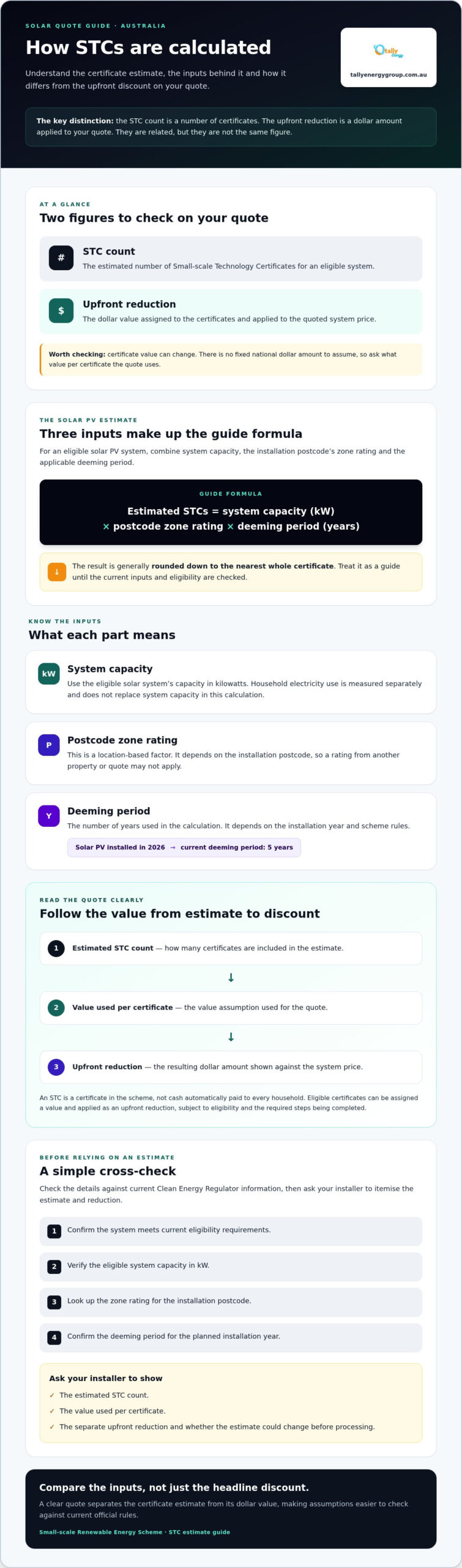
For an eligible solar PV system, the small scale technology certificates calculation formula combines three inputs: system capacity, the rating for the installation postcode and the applicable deeming period. It estimates the certificate count, not the dollar reduction on a quote. Treat the result as a guide, then confirm the current method and inputs with the Clean Energy Regulator before relying on it.
Which inputs belong in the solar PV formula?
System capacity is the eligible solar system’s capacity in kilowatts (kW). It is not your household’s electricity use, which is measured separately and does not replace system capacity in this calculation.
Postcode zone rating is a location-based factor. The applicable rating depends on the installation postcode, so do not assume another property or quote uses the same factor. Check the postcode using official Clean Energy Regulator information.
Deeming period is the number of years used in the calculation. It depends on the installation year and scheme rules. For a solar PV system installed in 2026, the current deeming period is five years. As this treatment changes over time, confirm the period that applies to your planned installation date.
How do you apply the formula without mixing up the inputs?
Start with the variables, then replace them with verified details:
- 1. Confirm the system meets current eligibility requirements.
- 2. Identify the eligible system capacity in kW.
- 3. Look up the zone rating for the installation postcode.
- 4. Confirm the deeming period for the installation year.
Guide formula: estimated STCs = system capacity (kW) × postcode zone rating × applicable deeming period (years). The result is generally rounded down to the nearest whole certificate. Before treating the estimate as final, check the current official factors and make sure each input matches the proposed installation.
For a practical cross-check, enter the system and location details in the Clean Energy Regulator REC Registry’s STC Calculator. If the result differs from a quote, ask which input explains the difference instead of assuming either figure is correct. System design helps establish the details used in the estimate. You can request a solar quote that shows the calculation inputs for review.
Which details can change an STC calculation or make an estimate inaccurate?
An STC estimate can look precise while relying on assumptions that do not match the final installation. The small scale technology certificates calculation formula uses defined inputs, but the certificate count still depends on the system and installation meeting current scheme requirements. Check the details behind the estimate rather than relying on the number alone.
How do system size, installation timing and zone rating affect the estimate?
For solar PV, confirm the eligible system capacity, installation postcode and installation date. These details can differ between quotes, even for homes with similar electricity use. Household consumption is not a substitute for the system capacity used in the calculation, and you should not copy a postcode zone rating from another property without checking it.
Timing matters because the applicable deeming treatment is linked to the installation year. A quote prepared before installation may need to be checked again if the timing changes. Ask the installer which installation date and official factors underpin the estimate, then confirm the postcode rating with the Clean Energy Regulator.
Check that the proposed system capacity and configuration match the details used for the STC estimate. If you are comparing panel options or system designs, the solar panel buying guide can help you review what is included before assessing the quote.
Are battery STCs calculated the same way as solar PV STCs?
No. Do not automatically apply the solar PV calculation to a battery. Battery eligibility and certificate allocation follow separate requirements, so check the system type, battery details and installation against current official guidance. If a quote includes both solar and a battery, ask for the estimates to be explained separately.
The STC battery tier structure means allocation may depend on battery size and the applicable tiers, rather than using the solar PV inputs. Confirm which current tier treatment and eligibility rules the installer has used. Do not rely on an old example or assume every battery qualifies in the same way. For broader battery considerations, see the Australian solar battery guide.
Keep the certificate count and dollar reduction separate. The count depends on eligible system and installation details; the quoted reduction also depends on the certificate value applied. Ask the installer to itemise both and explain any assumptions. This gives you a clearer basis for comparing estimates without treating an unconfirmed figure as final.
How can you check an STC estimate and understand the upfront discount?
A useful STC estimate shows its assumptions, not just a final figure. Use this checklist to review the quote and identify what needs clarification before you accept the discount.
What should you check on an STC estimate?
- System details: Check that the system capacity and configuration in the quote match the proposed installation.
- Installation timing: Confirm which installation date or year the estimate assumes, as this can affect the applicable deeming treatment.
- Postcode: Make sure the calculation uses the installation postcode, then check its zone rating against current Clean Energy Regulator information.
- Eligibility and factors: Ask whether the estimate follows current scheme requirements and official calculation guidance. Do not assume a proposed system qualifies without confirmation.
- Separate figures: Look for the estimated certificate count and upfront reduction as distinct items. The count is not a dollar amount; the reduction depends on the certificate value applied to the quote.
- Components and warranties: Review the quoted equipment details and ask what product warranties apply to the components included in your system.
The small scale technology certificates calculation formula can help you understand the estimate, but it does not confirm eligibility or lock in the final discount. Check those details against your installation and the current rules.
What questions should you ask before accepting the discount?
If the quote does not explain its assumptions, ask the installer to put them in writing. For example:
- Which system capacity, postcode and installation timing were used?
- Have the current eligibility requirements and official factors been checked?
- How was the certificate count estimated, and what value per certificate was used to calculate the upfront reduction?
- Who will manage the certificate assignment, and what consent or paperwork will I need to provide?
- Could the estimate or applied reduction change before the certificates are processed?
- Which components are included, and where can I review their product warranty terms?
Do not treat an unexplained estimate as guaranteed. A clear response should tell you what the quote assumes and what still needs confirmation. Keep the written explanation with the quote so you can compare proposals using the same details.
For a free quote with the STC estimate and upfront reduction itemised, request a solar quote.
What are the next steps for confirming your STCs with a solar installer?
Use your estimate as a starting point, then have the proposed system and installation details checked before relying on the certificate count or discount. The small scale technology certificates calculation formula helps explain the estimate, but a project-specific calculation depends on confirmed information and current scheme requirements.
What information should you prepare for a quote?
Gather the details you already have. They can help the installer assess the proposed system and explain what still needs confirming:
- Proposed system capacity: Note the planned solar system size, if known.
- Property postcode: This helps identify the location input used for the estimate.
- Installation details: Share any proposed timing or other information that may affect eligibility and calculation inputs.
- Electricity-use information: Recent bills or usage details can help the installer assess whether the proposed system suits your household. This is useful for system design, but it does not replace the capacity used in the STC calculation.
- Battery plans: If your quote includes a battery, ask for its eligibility and certificate estimate to be checked separately from the solar PV calculation.
How can an installer help you confirm the calculation?
Ask the installer to walk you through the estimate using your project details. They should explain which system information, installation timing and postcode factors were used, and identify the current official guidance they checked. If an input is provisional, ask what needs to be confirmed and whether it could change the estimate.
Review the quote for two separate figures: the estimated certificate count and the upfront discount applied. Ask how the discount was worked out, who will handle the certificate assignment, and whether you need to provide consent or paperwork. A clear, itemised quote helps you understand the estimate without mistaking it for a guaranteed certificate amount.
Tally Energy Group designs and installs residential and commercial solar systems across Australia, with system options from 6.6kW to 50kW and solar battery packages. A project-specific assessment can connect the proposed design with the details used in its STC estimate, without assuming a particular certificate count or discount in advance.
Have your system details ready? Request a free solar quote and ask for the STC estimate and upfront reduction to be itemised.
Take the next step with a clear STC estimate
You can now review an STC estimate with more confidence. The small scale technology certificates calculation formula provides a guide, but the system details, postcode, installation timing and current eligibility rules all need checking before you rely on the result.
Keep the certificate count separate from the dollar reduction in your quote. Ask your installer to explain the inputs, identify the current official guidance used and itemise both figures. You can also ask which approvals or project steps need to be completed, so you understand what remains to be done without assuming a timeframe.
Tally Energy Group designs and installs residential and commercial solar systems across Australia. Its project-based service includes system design and installation, with solar battery packages also available.
Ready to discuss a system suited to your property? Request a free solar quote and ask for the STC estimate and upfront reduction to be shown clearly. A well-explained quote is a practical first step towards an informed solar decision.
Frequently Asked Questions
What is the formula for calculating Small-scale Technology Certificates?
For eligible solar PV, the small scale technology certificates calculation formula is system capacity in kW × the applicable postcode zone rating × the deeming period in years. The result is generally rounded down to a whole certificate. The inputs determine the estimated certificate count, not the dollar discount. Check current eligibility and calculation guidance with the Clean Energy Regulator before treating an estimate as final.
How do I calculate STCs for a solar system in Australia?
Start by confirming the proposed system’s eligible capacity, installation postcode and expected installation timing. Then use the Clean Energy Regulator’s official STC Calculator to estimate the certificate count, checking that current scheme factors apply. Treat the result as a guide, not a final entitlement. Ask your installer to verify the system and site details and show how the estimate relates to the quote’s upfront reduction.
Does the postcode affect the number of STCs?
Yes. The postcode determines the zone rating used in the solar PV calculation, so an estimate based on a different location may not match your property. Check the exact installation postcode against current Clean Energy Regulator information rather than assuming a nearby postcode has the same rating. Ask your installer to state which postcode and zone factor they used, particularly if those details are not shown in the quote.
Do STCs have a fixed dollar value?
No. The certificate count and the dollar value applied to a quote are separate figures, and the market value of STCs can change. An installer or agent may apply a value to the certificates as an upfront reduction, so quotes can show different discounts even when certificate counts are similar. Ask which value was used, how the reduction was calculated and whether it may change before the certificates are processed.
Are solar battery STCs calculated using the same formula as solar panels?
No. Do not apply the solar PV formula to a battery without checking its separate eligibility and calculation requirements. Battery certificate allocation may depend on the current STC battery tier structure and the battery’s details. If your quote includes solar panels and a battery, ask the installer to explain each estimate separately, identify the official guidance used and show how any certificate value affects the quoted upfront reduction.
Can I calculate my STCs before choosing a solar installer?
Yes, you can prepare a preliminary estimate before choosing an installer by using the Clean Energy Regulator’s STC Calculator and entering the relevant system and location details. Treat the result as an initial guide: your final system design, installation timing and eligibility still need confirmation. When comparing quotes, check that each installer has used consistent assumptions and separated the estimated certificate count from the discount.
Why is the STC amount different between two solar quotes?
Quotes may use different system details, installation timing, postcode information or eligibility assumptions. They may also apply different dollar values per certificate when calculating the upfront reduction. First compare the estimated certificate counts, then compare the discount values shown separately. Ask each installer to provide the calculation inputs and assumptions in writing. If a figure remains unexplained, check it against current Clean Energy Regulator guidance before relying on it.









Comments are closed