


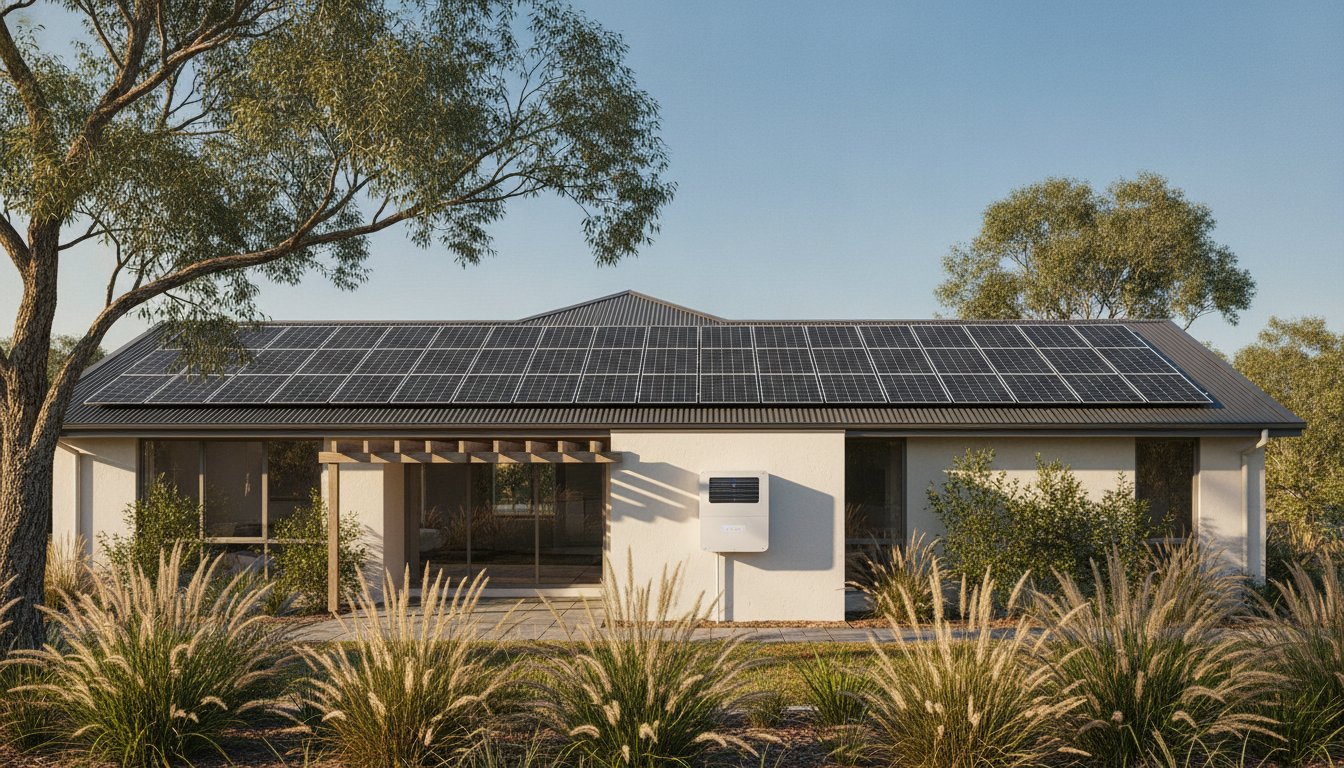
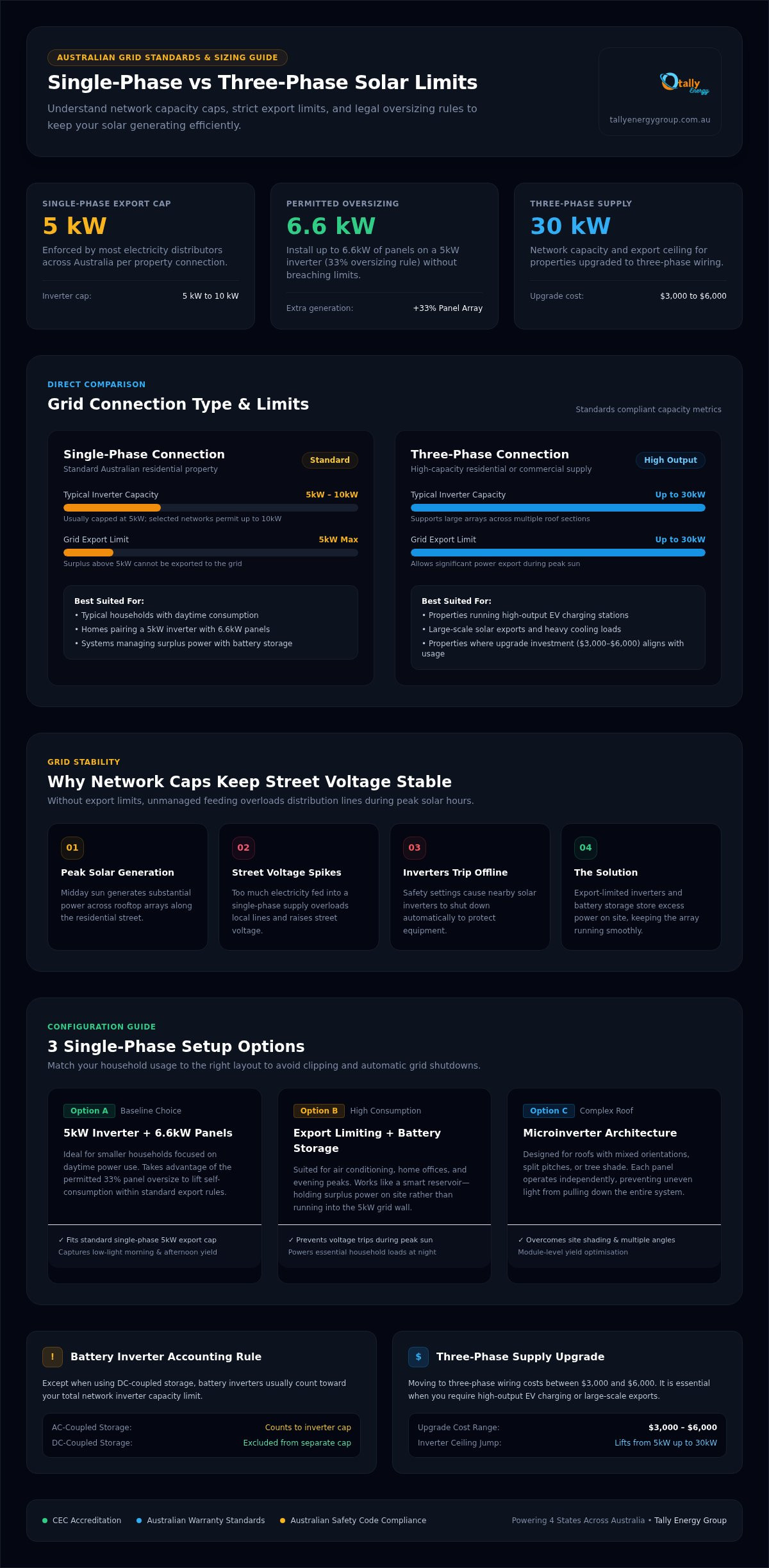
Most Australian electricity distributors cap single-phase inverter capacity at 5kW and restrict grid Exports to 5kW per phase. On some networks the allowed inverter capacity sits between 5kW and 10kW while the export cap stays at 5kW. Clean energy standards still permit up to 6.6kW of panels on a 5kW inverter so you can lift daily generation without breaching the export rule. Your real choice is whether to stay single-phase with oversized panels, add export limiting with storage, or upgrade the supply. Request a Free Quote tailored to your local grid limits.
Key Takeaways: Australian single-phase solar inverter limits typically range from 5kW to 10kW, though most distributors enforce a strict 5kW grid export cap per property.
- Standard single-phase connections allow 5kW inverter capacity, while three-phase upgrades support up to 30kW.
- Except when using DC-coupled storage, battery inverters usually count toward your total network inverter capacity limit.
- Upgrade to three-phase power for $3,000 to $6,000 if you require high-output EV charging or large-scale exports.
Single-phase grid rules: your 3 best setup options
When export is locked at 5kW, poorly matched gear clips power at noon while you still buy electricity after dark. Sizing to the network threshold stops automatic shutdowns in peak sun and keeps generation useful.
Three common single-phase situations, with a clear pick for each:
- Smaller household focused on daytime use: A 5kW inverter with up to 6.6kW of panels stays inside baseline export rules and uses the permitted 33% panel oversize to lift self-consumption.
- High-consumption home (air-con, home office, evening peaks): An export-limited inverter with battery storage holds surplus on site instead of hitting the 5kW export wall.
- Complex roof, mixed orientations or shade: A microinverter layout lets each panel work on its own. This shading comparison guide shows how that approach handles uneven light.
An export-limited system works like a smart rainwater tank: it gathers what you can use and diverts overflow before the drains flood.
Clear approvals take time, and local strata rules often complicate the utility side. Buyers may need the strata committee to explain charges and how much flexibility exists when changing providers.
A commenter in the flatchat.com.au thread "Topic: How do we choose a new electricity supplier?":
"Everybody has a slightly different set of circumstances so the best thing you can do is talk to someone on your strata committee and ask them what all the charges mean and how much flexibility you have with changing energy providers." (source)
If you own in a multi-unit complex, weigh shared electrical rules alongside network export limits before you install. A direct talk with committee members clarifies billing structures and helps you choose a compatible energy provider.
Why network caps keep your street voltage Stable
Distribution network service providers set inverter limits to hold local grid stability and prevent hazardous voltage spikes in peak sun hours.
Too much electricity fed into a single-phase supply overloads the lines quickly. Voltage rises on the street and nearby solar inverters trip on their safety settings.
That pattern is why your bill can stay high even when personal daytime use looks modest. Unmanaged Exports push voltage up, your inverter drops offline, and you pay for grid power while the array sits idle.
You avoid that loop by balancing household generation against the local lines. Battery storage keeps unused power on site instead of sending it out, so tight export caps matter less to your daily result.
Working with Sydney solar installers keeps the design inside network rules and Australian safety standards. Ask for a Free Quote so the layout favours self-consumption under your limit.
Single-phase size limits versus three-phase capacity
Single-phase homes usually face a 5kW export limit. Inverter capacity is commonly 5kW; on some networks it ranges from 5kW to 10kW. Three-phase setups allow up to 30kW.
| Grid Connection Type | Typical Inverter Limit | Typical Export Limit |
|---|---|---|
| Single Phase | 5kW to 10kW | 5kW |
| Three Phase | 30kW | 30kW |
Fixed versus variable tariffs change how much value you pull from that capped capacity. A budget inverter comparison helps you weigh entry cost against daily yield before you lock the hardware list.
Situation: A South Fremantle family watched bills climb from year-round air conditioning and a home office.
Solution: A custom 10kW design used coastal salt-mist certified Jinko panels and a Sungrow inverter matched to the site.
Result: Electricity costs came under control, daytime grid reliance dropped, and the household gained a base for later battery storage while offsetting rising Synergy charges.
CEC-accredited, salt-mist certified hardware is the compliance path for DNSP voltage rules. Battery storage can keep essential loads powered when export is capped. Request a personalised quote to confirm the capacity your network will approve.
Tip: Always install CEC-accredited hardware to ensure full compliance with DNSP voltage limits.
Among Tally Energy Group’s Google reviews, a customer (5★) wrote:
"Great service,reasonable prices,and fast service. I highly reccomend him"
On tariff choice, a participant posted in the forum.ovoenergy.com thread "Fixed or otherwise.":
"During the pandemic I saw the benefit from choosing a fixed tariff. We had the energy crisis and it saved me some money. But about last three years when the prices are more or less Stable, I see that the variable tariff is the cheapest option for me." (source)
Fixed rates protect you during market spikes; variable rates can cost less when wholesale prices stay steady. That tariff call sits beside your inverter limit when you model payback.
Battery inverters count towards the inverter limit
Battery inverters count towards your single-phase inverter limit, so total capacity rules still apply. Many homeowners assume storage bypasses the cap. Network operators add every connected inverter on the property when they set the export threshold.
AC-coupled systems add their inverter rating to your solar total; DC-coupled batteries share the existing solar inverter. Daytime use plus local storage is how you stay productive inside a tight doorway of allowed capacity.
Check recent solar news for regulatory changes that affect combined solar and battery ratings. Get in touch for a personalised estimate on a compliant layout.
Upgrading to 3-phase wiring costs $3,000 to $6,000
Upgrading the electrical service removes the export bottleneck so the array can run at full output. After a single-phase install you open the bill expecting a sharp drop, yet the total barely moves because the inverter limit still caps what you send back.
Moving the home to three-phase lets high-consumption households export full generation without constant clipping. The upfront work is larger, yet it ends curtailment for large families and EV owners who need headroom.
The job needs a dedicated switchboard upgrade and physical street connection work. Expenses vary with layout, so request exact figures before you commit. Battery storage can absorb surplus without a phase change when export limiting already covers your loads. Local teams built around fast approvals and clean installations keep the path practical.
5 Steps to connect large solar systems legally
Oversized arrays need approval from your local electricity network provider so the single-phase inverter limit is respected from day one.
Grid operators enforce export thresholds on residential properties across Australia. Compliance prevents voltage issues and protects battery performance once storage is added.
- Assess property capacity: Evaluate your current switchboard and network connection rules.
- Select accredited experts: Ensure your system designer holds Clean Energy Council accreditation. Installers are accredited by the Clean Energy Council and comply with Australian standards.
- Submit network application: Request grid approval for your desired single-phase system size.
- Complete installation: Place your approved equipment using certified local professionals.
- Finalise grid connection: Receive meter reconfigurations before selecting your updated retail tariff.
A quick talk with a neighbour who already gained approval can surface practical snags before you lodge paperwork. Experienced local crews are how you secure fast approvals without redesign loops. Claim your complimentary estimate when you are ready to lodge.
Tip: Verify that your installer holds Clean Energy Council accreditation before submitting your grid application.
Frequently asked questions
Do battery inverters count towards the inverter limit?
Battery inverters often count toward your total single-phase inverter limit depending on local network rules. Grid operators usually combine solar and AC-coupled battery capacity when they calculate your allowance. Clean Energy Council accredited installers design systems that comply with Australian standards. Reach out for system-design pricing if you want storage inside the same cap.
Why are there limits on grid-connected system sizes?
Grid limits protect local power lines from voltage spikes caused by heavy daytime solar export. Capping total capacity keeps street voltage Stable and household supply safe. Ask for honest advice on options that fit your distributor’s threshold.
What are the size limits?
Size limits vary by region, but most electricity networks enforce a firm cap for standard single-phase residential connections. Those thresholds control how much power you may feed back into the grid. According to a Fremantle case study, a South Fremantle family installed a 10kW Jinko solar system with a Sungrow inverter to offset rising electricity costs. Contact the team for figures matched to your network.
What is the typical maximum size for a single‑phase solar system?
The standard limit for a single-phase setup is typically a 5kW inverter output capacity. Many grid operators still allow extra panel capacity on the roof when export controls limit what flows back to the network. Battery storage can hold that extra energy for night use. Ask for a custom setup quote when you want panels, inverter and storage sized together.
How do three‑phase limits differ from single‑phase limits?
Three-phase connections allow up to three times the capacity of a single-phase property. Splitting the load across three lines lets you install larger arrays safely and add bigger appliances or storage without hitting the same wall. Talk through upgrade costs if your loads already outgrow a 5kW export cap.
Final steps for your grid approval
The same decisions you faced at the start (stay on single-phase with oversized panels, add export-limited storage, or move to three-phase) decide how smooth grid approval feels and how much of your array you actually use.
CEC-accredited installers at Tally Energy Group align residential systems with Australian safety standards. Local expertise and fast approvals protect the return on the hardware you fit.
Ready to model bill reductions? Run your numbers through the savings calculator.
Contact the team for a Free Quote on a custom system design built around your distributor’s rules.








Comments are closed