


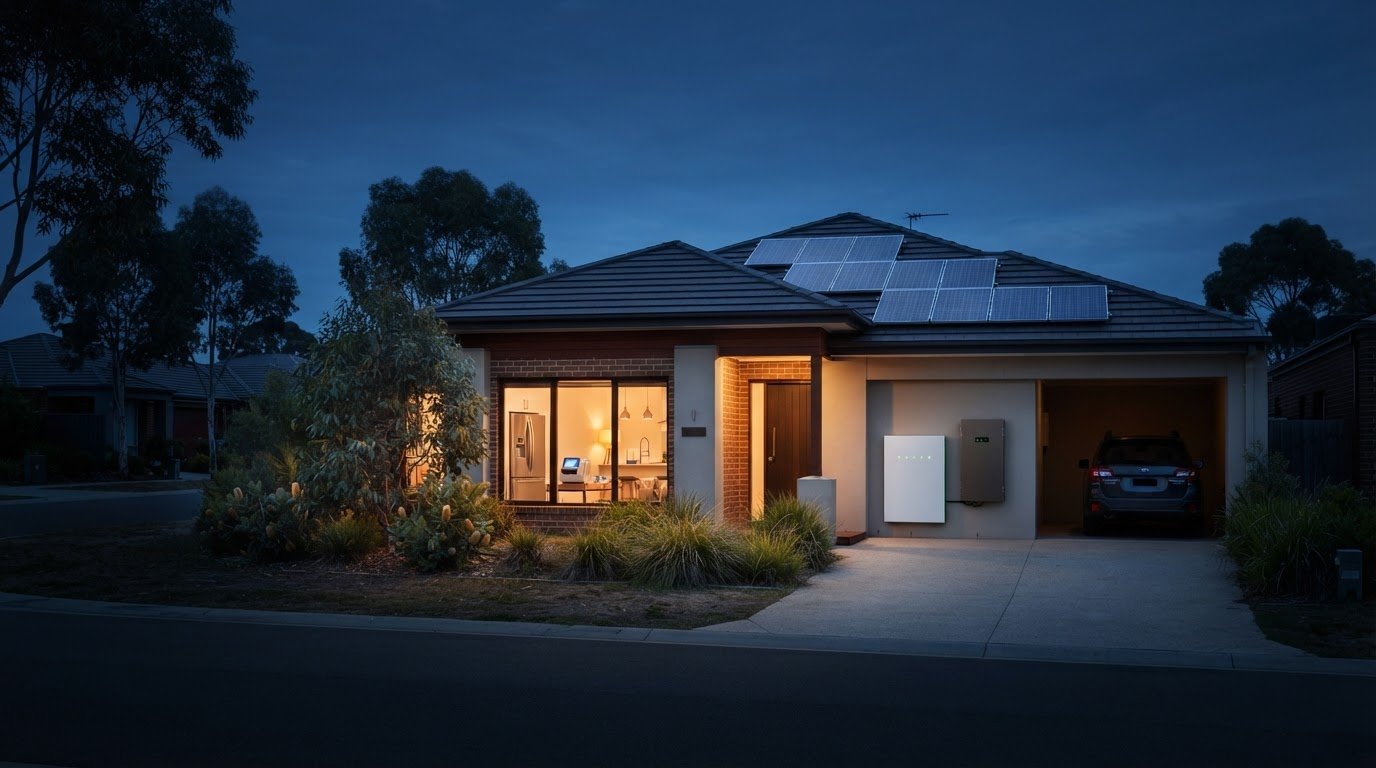
When comparing backup energy solutions, start by asking what you need to keep running during a blackout. Solar panels alone don’t guarantee backup power, and the right setup depends on how your system is designed. Identify the appliances and circuits that matter most before comparing equipment.
It’s understandable to expect a home battery to power everything when the grid goes down. In practice, outage backup depends on the battery and inverter setup, the power available and which essential circuits are connected. A professionally assessed solar battery system may suit your needs, but check its limits before choosing a package.
This guide compares common backup options, explains what a solar battery can and can’t do during an outage, and outlines the household details that help assess suitability. You’ll learn how to list essential loads, what installation requirements to discuss and how to weigh ongoing value against your priorities. Tally Energy Group designs and installs residential solar systems and solar battery packages, with system choices guided by household usage and backup needs.
Key Takeaways
- Compare grid-connected solar, battery storage and generator backup by how each may support your home during an outage.
- Use your household energy use and priority appliances to assess suitable backup options.
- Check whether your existing inverter, battery and electrical setup can support the backup circuits you want.
- Ask installers how proposals account for stored energy, site conditions and the backup you expect.
- Learn how Tally Energy Group’s four-step customer journey can help you consider a residential solar system or battery package.
What should backup energy solutions do during a home power outage?
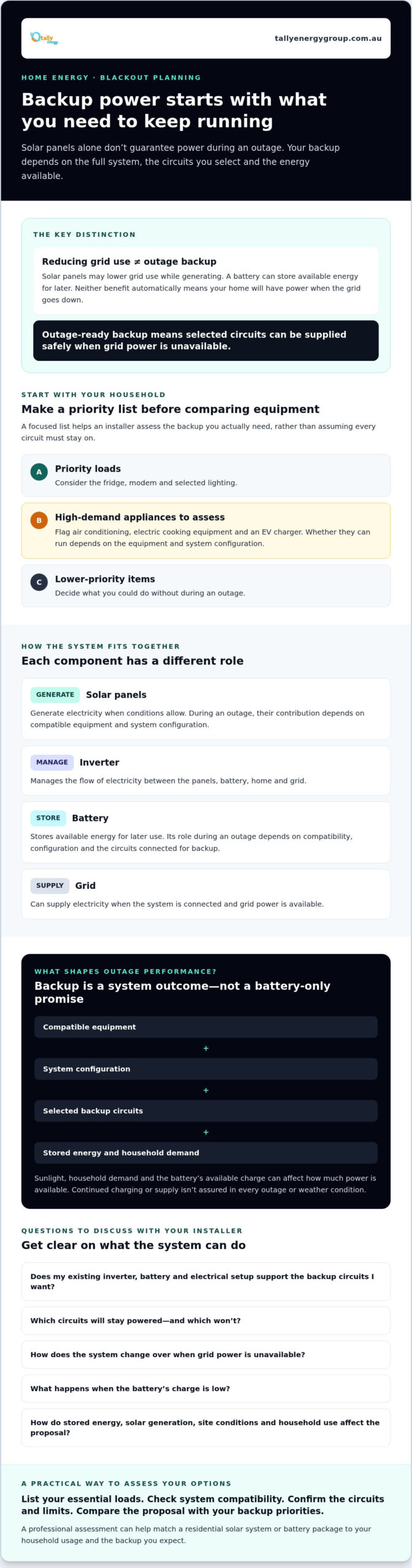
Start with the outcome you need, not the equipment. Backup energy is a setup designed to supply selected household circuits when grid power is unavailable. That might mean keeping refrigeration, communications and a few lights running, rather than powering every appliance in the home.
Backup protection is different from reducing electricity bills. Solar panels may lower grid use when they generate electricity, while a battery can store available energy for later use. Neither benefit automatically means your home will have power during an outage. Ordinary grid-connected solar operation and outage-ready backup are not the same thing.
Which household loads matter most during an outage?
Make a short priority list before comparing systems. Note the appliances and circuits you’d want to keep running, such as the fridge, modem or selected lighting. Then consider which lower-priority items you could do without. Not every home needs every circuit backed up, and a focused list helps keep the system assessment aligned with your needs.
Flag high-demand appliances, including air conditioning, electric cooking equipment or an EV charger, for an installer to assess. Whether they can run depends on the equipment and system configuration. Don’t assume they’ll be supported or estimate runtime without professional advice.
Does rooftop solar automatically provide backup power?
No. Don’t assume a standard grid-connected solar system will supply your home when the grid goes down. Confirm with your installer whether your system has backup capability, which circuits it can supply and what equipment or configuration is required. A home energy storage system can store electricity for later use, but its role in an outage depends on how the full system is set up.
Solar panels generate electricity. Outage-ready backup depends on equipment configured to safely supply selected circuits when grid power is unavailable.
That distinction matters when comparing backup energy options. Ask for a clear explanation of what will stay powered, what won’t and how stored energy and solar generation affect operation. A professional assessment can match your priorities to the system’s actual capabilities, rather than relying on a broad promise that the whole home will keep running.
How does a solar battery provide backup energy at home?
A solar battery system brings together several components, each with a different role. Solar panels generate electricity when conditions allow. An inverter manages the flow of electricity between the panels, battery, home and grid. The battery stores available energy for later use, while the grid can supply electricity when the system is connected and grid power is available.
Storage can shift solar energy from times of generation to times of household use. But having a battery doesn’t automatically mean your home will have power during an outage. Backup depends on compatible equipment, system configuration and which circuits are connected for backup. For more background, look for an Australian solar battery storage guide.
What happens to stored energy when the grid goes down?
A system configured for backup may switch to supplying designated circuits when grid power is unavailable. Changeover behaviour and the circuits that remain powered vary by system. Ask your installer to explain how the system responds, which circuits are included and what limitations apply. Check that the setup meets your priorities before choosing a battery package.
Outage performance depends on system compatibility, configuration, selected circuits, stored energy and household demand. No single battery size or setup promises the same result for every home.
How do solar panels and a battery work together?
When solar panels are generating, electricity may supply household use and any available surplus may charge the battery, depending on system design and operating conditions. During an outage, solar contribution also depends on compatible equipment and system configuration. Sunlight, household demand and the battery’s available charge can all affect how much power is available. Continued charging or supply isn’t assured in every outage or weather condition.
Before deciding, ask the installer to explain how your panels, inverter and battery are expected to work together, including what happens when the battery’s charge is low. A tailored assessment can clarify whether a solar battery package fits your home and the circuits you want supported. You can request a free solar battery quote from Tally Energy Group after gathering details about your current system, household use and backup priorities.
How do backup energy options compare for Australian homes?
There’s no single backup setup that suits every household. Start by comparing what you need powered, what equipment is already installed and what ongoing operation depends on. Use the table to frame questions for an installer, rather than treating any option as a guaranteed fit.
| Option | Outage capability | What it depends on | Questions to ask |
|---|---|---|---|
| Grid-connected solar without storage | Don’t assume it will power your home during an outage. Confirm the system’s behaviour with your installer. | Solar generation and grid-connected equipment. | Can any circuits operate during an outage, or is additional equipment needed? |
| Solar paired with a battery | A suitably configured system may supply selected backup circuits. | Compatible equipment, stored energy, solar conditions and household demand. | Which circuits are backed up, and what limits supply? |
| Generator-based backup | Capability depends on the generator and how it is set up for the loads. | Fuel availability and ongoing operation. | Which loads can it support, and what installation, maintenance and warranty terms apply? |
When might solar with battery storage suit a household?
A battery may be worth assessing if you want selected circuits supported during outages and already have solar, or are considering it. Suitability depends on your outage priorities, household usage, existing equipment and professional system design. Stored capacity and the loads connected for backup shape what the system can practically supply. For more battery basics, consult an Australian solar battery storage guide and ask an installer how its advice applies to your home.
What should you ask before considering another backup option?
Ask what loads the option can support, what its operation relies on and what happens when stored energy or fuel runs low. Compare installation scope, maintenance needs and warranty terms, and request a clear explanation of any limits. These questions help you weigh ongoing responsibilities alongside outage capability.
Tally Energy Group offers solar battery packages, not generators or off-grid solar systems. If a professionally assessed, grid-connected battery setup is among the options you’re considering, compare its proposed backup circuits and system requirements with your priorities. This helps you weigh options without assuming one solution is right for every Australian home.
How should you assess battery size, installation and value?
Battery size is only part of the decision. A useful proposal should connect your household use and outage priorities with the equipment already in place, the circuits you want backed up and the property’s installation requirements. Use these steps before comparing quotes:
- Review your electricity use. Gather recent bills or other usage information to explain when and how your household uses power.
- List essential loads. Name the appliances and circuits you want to prioritise, then flag high-demand equipment for assessment.
- Check existing equipment. Record details of your current solar panels, inverter and any battery. Ask whether they can work with the proposed setup.
- Assess the site and electrical setup. An installer should consider the property, available installation location and electrical system, including the circuits intended for backup.
- Compare proposals. Review the system design, installation scope, warranty terms, safety information and after-sales support, not just the battery size.
A tailored quote depends on your property and selected system. Ask the installer to explain the assumptions behind the design, its limits and what the proposed setup is intended to power.
What information helps an installer assess your backup needs?
Have your electricity bills or usage details ready, along with information about your existing solar system and a list of priority loads. Be clear about which appliances matter most during an outage. Ask how the design accounts for those loads and what it won’t support. A Solar panel system switchboard upgrade may be needed in some cases, but it’s a site-specific requirement, not a default for every home.
How can you assess installation safety and proposal quality?
Ask who will carry out the work, what credentials they hold and which Australian safety requirements apply to your installation. For Solar battery installation safety, request a clear explanation of how the proposed work will meet relevant requirements and ask what documentation you’ll receive. You can also review a published guide to solar panel installation pitfalls for broader installation due diligence.
Compare proposals on practical details: which circuits are included, what equipment is specified, what is excluded, how warranty coverage is described and who to contact for support after installation. If a proposal makes broad claims about whole-home backup, ask the installer to show how the design supports that outcome.
Once you’ve gathered your usage details, equipment information and essential-load list, you can request a free solar battery quote from Tally Energy Group. This gives the team a clear starting point to assess a solar battery package against your property and backup priorities.
How can Tally Energy Group help you choose a backup solution?
Choosing a battery package starts with understanding your home, not picking equipment from a list. Tally Energy Group’s four-step solar journey provides a process for moving from initial information towards a considered system choice. The details of each step should be explained as your needs and property are assessed, without assuming a particular design or outcome before that review.
Tally designs and installs residential solar systems and solar battery packages for Australian customers. A battery package may be an option if your priorities, existing equipment and site assessment point towards a suitable grid-connected setup. The aim is to understand what you want supported during an outage and what the proposed system can realistically do.
What should you expect when requesting a solar battery quote?
You can use Tally’s online estimator to share relevant property and energy-use details, then request a free quote. To make the discussion useful, have your existing solar system information and list of priority loads on hand. Be ready to explain which circuits matter most during an outage, such as refrigeration or selected lighting.
Ask how the proposed battery system would support those circuits, what its limits are and what the installation includes. Clarify warranty terms and any assumptions behind the design. A quote is a chance to understand the proposal, not a promise of a particular saving, approval speed or outage duration.
How can you make a confident next decision?
Compare the proposed design with the essential loads you identified earlier in this guide. Check that the quote clearly describes the equipment, intended backup circuits, installation scope, safety checks, exclusions and ongoing support. If a detail is unclear, ask for it to be explained before deciding. A sound proposal should make its intended operation and limitations understandable.
These checks help keep your decision grounded in your household’s priorities rather than broad sales claims. Ask the installer to explain any relevant requirements and how they apply to your proposed installation.
Once you’ve considered the system limits and what the installation covers, you can request a free solar battery quote through Tally Energy Group’s online estimator. Share your priority loads, existing solar details and main outage concerns so your enquiry starts with the information that matters to your home.
Choose backup with your household priorities in mind
Reliable backup starts with a clear list of what you need to keep running. Solar panels alone don’t guarantee power during an outage, and a battery’s backup capability depends on its configuration, compatible equipment and the circuits selected. Compare proposals by how well they match your essential loads, explain system limits and set out installation scope, safety checks and warranty terms.
If you’re researching backup energy solutions denham court, use your household energy details and existing solar information to guide the next conversation. Tally Energy Group offers residential solar systems and solar battery packages. Share your requirements through its online estimator and request a free quote to explore an option for your home.
Request a free solar and battery quote and ask for a clear explanation of the proposed backup circuits, equipment and limitations. A professional assessment can help you make a considered choice that fits your priorities.
Frequently Asked Questions
Is solar battery backup enough to power an entire home?
Not automatically. Whole-home backup depends on the system design, battery capability, electrical configuration and how much power your household needs at the time. Start by identifying essential circuits, such as refrigeration, communications and selected lighting, then ask an installer which loads the proposed setup can support. Don’t rely on a general claim about whole-home backup. Appliance capacity and how long power may be available require an assessment of your property and system.
Can solar panels work during a power outage without a battery?
Don’t assume ordinary grid-connected solar will operate during an outage. Whether it can depends on the equipment and system configuration, so ask your installer to confirm how your particular setup behaves. Daytime solar generation is not the same as a designed backup function. Before choosing a system, request a clear explanation of its documented outage behaviour, including what equipment is needed and whether any household circuits can receive power.
How much battery capacity do I need for backup energy?
There’s no universal battery size for backup. The capacity you need depends on the appliances and circuits you want to support, their energy use and your backup objective. If you’re researching backup energy solutions denham court, list your essential loads and share household usage information with an installer. Ask how the proposed capacity relates to those priorities and what limits apply. A tailored assessment is more useful than assuming a standard package will suit your home.
What happens if my solar battery runs out during an outage?
Once the battery’s usable capacity is depleted, backed-up loads may no longer receive stored energy, depending on the system design. Solar generation may help replenish the battery only if the equipment configuration and conditions allow it. Ask your installer what happens when the battery charge is low, whether solar can contribute during an outage and which loads have priority. Don’t assume power will continue uninterrupted or last for a set duration.
Do I need a switchboard upgrade for a solar battery installation?
Not necessarily. A switchboard change isn’t required by default for every property. The installer needs to assess your existing electrical setup and the proposed equipment to determine whether any work is needed. If a Solar panel system switchboard upgrade is proposed, ask why it’s required, what the work includes and how it appears in the quote. Request those details in writing so you can understand the scope before deciding.
How do I compare quotes for a solar battery backup system?
Compare the system design, backed-up circuits, equipment specifications, installation scope, applicable safety requirements, warranty terms and after-sales support. Ask each provider to explain the proposal’s assumptions and exclusions in plain language, and check their credentials. Don’t choose on headline price alone or rely on savings claims that haven’t been clearly explained. If any detail is unclear, request clarification before accepting the proposal so you can compare like with like.








Comments are closed