


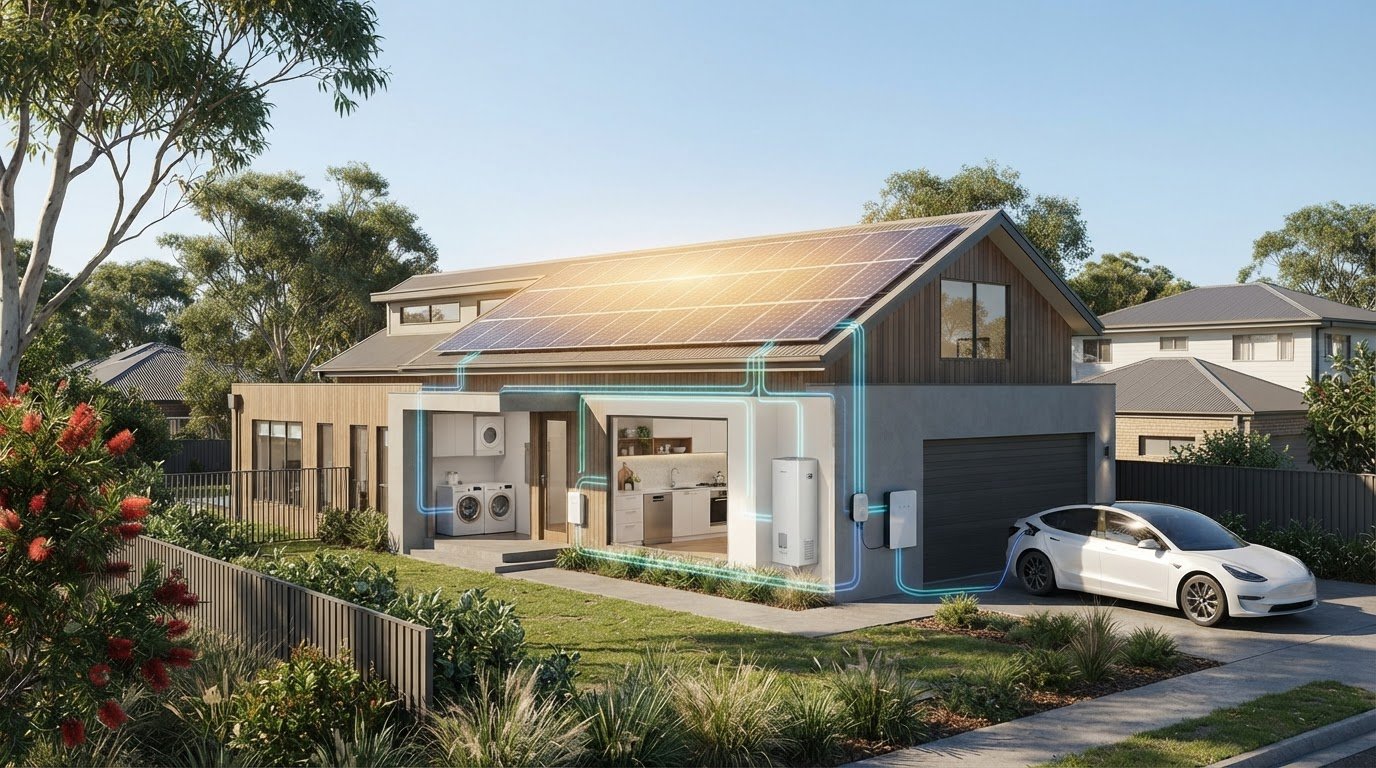
What if the first step to using more of your solar power isn’t buying a battery, but changing when you use electricity? Solar self consumption optimization strategies start with checking whether your household uses power while your panels are generating. If your panels produce most of their energy during the day while your household is busier in the morning and evening, some generation may be exported while you still draw power from the grid later.
That mismatch is common, and it doesn’t mean your solar system is underperforming. Start by understanding when your home uses electricity, then shift flexible tasks to sunnier hours where practical. A battery may help store surplus generation for later, but it’s one option to assess, not the automatic next step.
This guide explains how to compare your solar generation with household demand, test no-cost changes and scheduled loads, and decide whether battery storage deserves a closer look. You’ll also learn what system and usage information to gather before seeking tailored advice. Begin with the changes you can make today, then consider whether equipment or system design needs review.
Key Takeaways
- Compare when your solar system generates electricity with when your household uses it to identify opportunities to use more power at home.
- Review your usage, identify flexible appliances and schedule them to run during solar-generating hours where it suits your routine.
- Compare habit changes, scheduled loads and battery storage before deciding whether a battery may suit your household.
- Track generation, household use and exports over comparable periods, and account for seasonal differences.
- Gather system details and usage information before reviewing design options with a solar professional.
What solar self-consumption means and why timing matters
Solar self-consumption is the solar electricity your household uses at the property as it is generated. It is different from total solar generation, which is all the electricity your panels produce. Electricity your home does not use at that moment may be exported to the grid. A plain-English overview of solar self-consumption also explains why matching household demand with generation matters.
How rooftop solar generation meets household demand
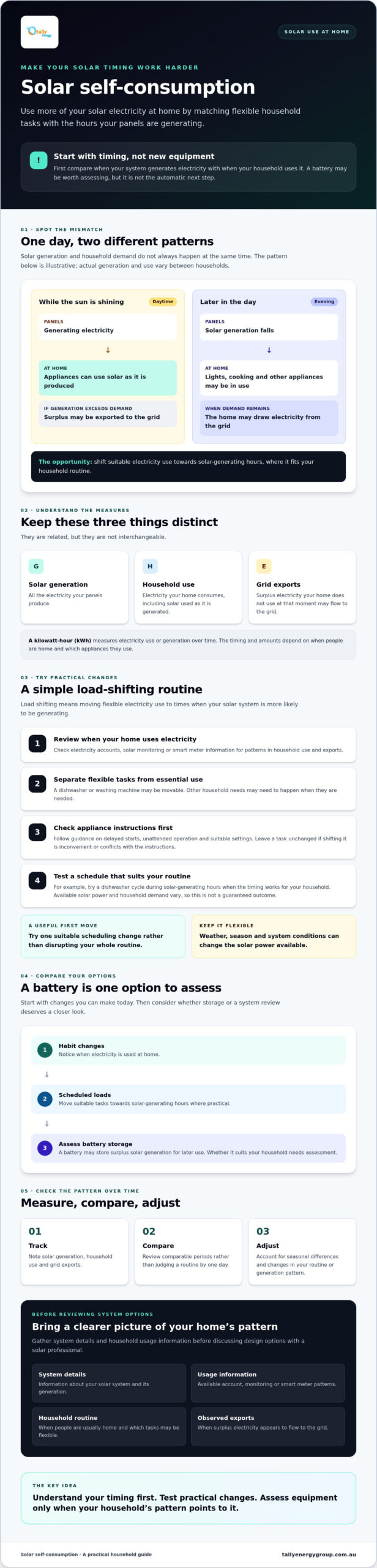
Picture a typical day: your panels generate electricity while the sun is shining. If someone is home and running an appliance, that demand can use some solar power as it is produced. If generation is greater than the home’s demand at that time, surplus electricity may flow to the grid. Later, when solar generation falls but lights, cooking and other appliances are in use, the home may draw electricity from the grid.
A kilowatt-hour (kWh) measures electricity use or generation over time. Solar generation, household consumption and grid exports are related, but they are not interchangeable measures. Their timing and amounts vary between households, depending on factors such as when people are home and which appliances they use.
Which household habits affect solar self-consumption?
Start with flexible electricity use. A dishwasher or washing machine may be able to run at different times, while other household needs are less flexible. Consider when people are usually home, which appliances run during the day and which tasks are routinely left until the evening. This quick review can reveal where your electricity use might better line up with solar generation.
You do not need to shift every task or disrupt your routine. First, look for a recurring mismatch: are you using electricity while your panels are generating, or does much of your demand happen outside those hours? That pattern can point to practical solar self consumption optimization strategies, starting with a small scheduling change rather than an assumption that you need new equipment.
Self-consumption helps you understand how much of your system’s output is used at home, but the result depends on your actual generation and usage. Reviewing those patterns gives you a better basis for deciding what to change next.
How to optimise solar self-consumption with household load shifting
Load shifting means moving flexible electricity use to times when your solar system is more likely to be generating power, so more of that electricity can be used at home. It is one of the practical solar self consumption optimization strategies to test before deciding whether you need additional equipment.
Work through the steps in order: review your electricity use, identify tasks that can be moved, schedule them for suitable solar-generating hours, then check whether the new routine works for your household. The goal is a change that fits daily life, not a schedule that creates inconvenience.
How to find flexible electricity use
Start with information you already have. Review electricity accounts for overall patterns, then check any available solar monitoring or smart meter information for when your home uses electricity or exports it. Separate essential uses, which need to happen when they are needed, from flexible appliance loads that could be rescheduled safely and conveniently.
Before changing an appliance’s operating time, read its instructions. Check any guidance on delayed starts, unattended operation and suitable settings. If a task cannot be shifted without disrupting your household or using the appliance against its instructions, leave it as it is.
How to schedule appliances around solar generation
Try moving suitable appliance use into the hours when your system commonly generates solar power. For example, if your household usually runs the dishwasher in the evening, test a daytime cycle when someone is home and the timing suits your routine. This is an example to try, not a guaranteed outcome: available solar power and household demand vary.
Generation changes with weather, season and system conditions, so a fixed schedule will not always match the available solar power. Use monitoring information to choose a practical window, and adjust it when your routine or generation pattern changes. Schneider Electric’s Understanding solar energy self-consumption provides further context on how locally generated solar can meet household demand.
Review the routine over time instead of judging it by one day. Note which appliances you shifted, whether the timing was workable and what your monitoring data shows about generation and use. That record makes it easier to decide whether to keep or adjust the schedule.
If you are assessing a new system, your household usage patterns can inform its design. Explore solar system design options from Tally Energy Group, which designs and installs residential and commercial solar systems.
Do you need a solar battery to improve self-consumption?
No. A battery is not the only way to use more of your solar electricity at home. You can begin by adjusting habits or scheduling flexible appliance use to better match solar generation. A battery is another option: it can store surplus solar electricity for later, subject to the system’s design and how your household uses power.
Compare the choices by effort, timing and household fit:
- Habit changes: Often the simplest place to start. You adjust when you use electricity without adding storage equipment. The change is useful only if it fits your routine and overlaps with solar generation.
- Scheduled loads: You set suitable appliances to run during solar-generating hours. This takes some planning and suits tasks that can be moved safely and conveniently.
- Battery storage: A battery can shift some surplus generation to a later time, such as the evening. It involves adding equipment, and its suitability depends on household demand and system design.
These solar self consumption optimization strategies are not an all-or-nothing choice. Review your actual usage first. A routine change may be enough to test, or your pattern may suggest that storage deserves a closer assessment.
When load shifting may be enough to start
If you have flexible tasks that can be done while your system is generating, try adjusting their timing before assuming you need a battery. Keep the change manageable: choose a task that fits your household, check the appliance instructions and assess whether the new routine is practical. This is a useful first step, not a promise of lower bills. Any financial effect depends on your usage and electricity tariff.
When to assess battery storage
Storage may be worth assessing if your household regularly uses electricity after solar generation has fallen and you have surplus generation at other times. A battery can hold some of that surplus for later, but how well it suits your home depends on factors such as your demand pattern and the design of the solar and battery system. Do not base the decision on evening use alone. Review usage information and tariff details as part of the assessment.
For a closer look at how storage works and what to consider, read the Australian solar battery storage guide. It can help you prepare questions about system design and household fit before comparing options.
A practical method to measure and improve your solar self-consumption
Use a before-and-after check to see whether a change is helping. You do not need specialised monitoring in every home. Start with information available through your inverter, electricity account or energy monitoring tools, along with notes about your routine.
What information to collect before changing your routine
Gather a baseline before adjusting appliance times. Look for records of solar generation, household electricity use and grid exports, if your system or provider makes them available. Also note roughly when key appliances run and when people are usually home. A brief written record can be useful if detailed monitoring is not available.
Include household changes that may affect demand, such as a shift to working from home or regular electric vehicle charging. These details matter because they can change when and how much electricity your household uses.
How to assess whether a strategy is helping
After changing a routine, compare the new pattern with your baseline. Where the data allows, check whether appliance use has moved closer to solar generation and whether grid exports have changed. Compare similar periods where practical rather than drawing a conclusion from a single day. Weather, season and system conditions can all affect the comparison.
Use this repeatable process:
- Record: Note available generation, usage and export information, along with the routine you are testing.
- Change: Adjust one manageable appliance schedule or household habit at a time.
- Review: Compare similar periods and note whether the new timing is convenient as well as useful.
- Reassess: Keep, adjust or stop the change. Repeat the check if you add equipment or your household routine changes.
Self-consumption is only part of the picture. Keep your electricity tariff and overall usage in mind before judging the financial effect. Without those details, it is not possible to promise a bill reduction. The best solar self consumption optimization strategies are ones you can assess using your own household data and maintain comfortably.
If your observations prompt you to review system capacity, compare your usage with the system size options available, such as a 6.6kW system. For advice tailored to your usage and solar generation, request a free quote from Tally Energy Group.
Plan your solar self-consumption strategy with a well-designed system
Use a clear sequence to decide what to do next: understand your household’s electricity use, shift flexible loads where practical, assess whether storage suits your needs, then review the system design. This keeps solar self consumption optimization strategies grounded in your actual usage rather than assumptions about what every home needs.
A system assessment is more useful when you can describe when your household uses electricity and how that lines up with solar generation. You do not need perfect records. Recent electricity accounts, available monitoring information and notes about your routine can give an adviser a practical starting point.
What to discuss during a solar system assessment
Share when your demand is usually highest, which appliances run regularly and whether that pattern changes across the week. Mention existing solar equipment, planned household changes and whether you are interested in battery storage. Ask how the proposed system design takes both your demand and solar generation into account, and request a clear explanation of the options being considered.
Useful details to gather include:
- Electricity account information and any available generation, usage or export records.
- Typical times for major household electricity use, including flexible appliance loads.
- Existing solar equipment and future plans that may affect household demand.
- Your interest in storage, along with the times you expect to use stored electricity.
When to request tailored solar advice
If routine changes do not address the mismatch between solar generation and household demand, tailored advice can help you review whether storage or a different system design is worth considering. A battery is not an automatic requirement. Its suitability depends on your usage and the proposed system design.
Tally Energy Group designs and installs residential and commercial solar systems nationally and offers solar battery packages. Compare proposals carefully: ask what each includes, how the design reflects your usage pattern and what assumptions inform the recommendation. Do not rely on a headline system size alone to judge whether an option fits your home.
Once you have gathered your system and usage details, request a free solar quote from Tally Energy Group. It is a straightforward next step to discuss your household’s needs and review suitable options, without assuming every home requires the same solution.
Make your next solar decision with confidence
Using more of your solar electricity starts with understanding when your home generates power and when it needs it. Review your usage, shift flexible tasks to suitable solar-generating hours, then compare the results over similar periods. If a timing gap remains, assess whether battery storage suits your household before committing to new equipment.
These solar self consumption optimization strategies work best when they reflect your actual routine, system information and electricity use. Keep those details handy when seeking advice, and ask how any proposed design accounts for your household’s demand and solar generation.
Tally Energy Group designs and installs residential and commercial solar systems and offers solar battery packages. If you are ready to discuss options, request a free solar quote.
Start with what you can measure, make changes that fit your home, and take the next step when you are ready.
Frequently Asked Questions
What does solar self-consumption mean?
Solar self-consumption is the solar electricity your household uses at home as your panels generate it. It differs from total generation, which is all the electricity your system produces, and from exports, which are surplus electricity sent to the grid. For example, if your panels are generating while an appliance is running, some solar power may meet that demand directly. The exact balance depends on your home’s generation and usage patterns.
How can I use more of my solar power at home?
Shift flexible electricity use to hours when your solar system is generating, where this suits your routine and appliance instructions. For example, you could schedule a suitable dishwasher cycle during the day instead of the evening. Start by reviewing available usage or monitoring information, then change one manageable habit and assess how it affects your pattern. These solar self consumption optimization strategies may help you make better use of generation, but results depend on your household.
Do I need a battery to increase solar self-consumption?
No, a battery is not essential. You can first try using flexible appliances during solar-generating hours, which may increase the amount of solar electricity used at home without adding storage equipment. A battery is another option: it can store surplus generation for later use, subject to system design. Whether it suits you depends on your household’s demand, when you use electricity and the system being considered. Review your usage before choosing equipment.
Can I run household appliances when my solar panels are generating?
Yes, you can run suitable household appliances while your panels are generating, provided you follow the appliance instructions and the timing works for your home. Electricity used at that moment may be supplied by your solar generation, depending on how much your system is producing and what else is drawing power. Appliances with flexible start times can be easier to schedule. Generation varies, so a sunny-day routine may not match every day.
How can I measure how much solar electricity my home uses?
Check what information is available through your inverter, electricity account or energy monitoring tools. Depending on your system, these may show solar generation, household consumption or electricity exported to the grid. You can also note when major appliances run and compare that with generation information. If you cannot see a direct self-consumption figure, the available data and a simple usage record can still help you identify timing patterns.
Does solar self-consumption change with the seasons?
Yes, the balance between solar generation and household use can change across the seasons. Daylight, weather and system conditions affect generation, while household routines and electricity demand may also shift. Compare similar periods where practical and avoid drawing conclusions from a single day. If you are tracking a schedule change, note the season and any major changes in your routine so you can interpret the pattern fairly.
Is a battery worthwhile if I export excess solar electricity?
Possibly, but exports alone do not show whether a battery is right for your home. Consider how much surplus generation is available, when your household uses electricity later, your electricity tariff and the system design. A battery can store surplus for later use, but its suitability and potential value depend on those details. Compare options using your own usage and tariff information before deciding, rather than assuming exported electricity means you need storage.








Comments are closed