



What if your rooftop solar panels were only doing half the job they were designed to do? Many Australian homeowners feel a justified sense of frustration when they see their hard-earned energy exported to the grid for a pittance, only to face “bill shock” when the sun goes down. It’s a common struggle to make sense of rising energy costs and complex technical jargon like kW versus kWh. You’ve likely realised that simply having panels isn’t enough to escape the cycle of expensive electricity. Integrating a solar battery is no longer just a luxury; it’s the essential brain of a modern energy strategy that ensures you use every watt you produce.
We’ve designed this guide to help you manage the complexities of energy storage with confidence and clarity. You’ll learn exactly how to choose, size, and install a system that delivers genuine energy independence and vital blackout protection during extreme weather. We’ll explore the current 2026 federal rebate landscape, compare different storage capacities, and provide a clear roadmap to help you maximise your rooftop investment. By the end of this article, you’ll have the professional insights needed to drastically reduce your power bills and secure your home’s energy future.
Key Takeaways
- Learn why shifting from grid exports to self-consumption is the most effective way to combat low feed-in tariffs and rising energy costs.
- Gain clarity on technical jargon by understanding the critical difference between kW and kWh to ensure your system meets your actual energy needs.
- Discover how a professionally designed solar battery setup provides essential blackout protection and turns your rooftop panels into a 24/7 power station.
- Stay ahead of the 2026 incentive landscape by understanding how national rebates can significantly lower the upfront cost of your storage system.
- Follow a proven four-step solar journey—from expert design to ongoing maintenance—to avoid common installation bottlenecks and ensure long-term reliability.
What is a Solar Battery and Why Does it Matter?
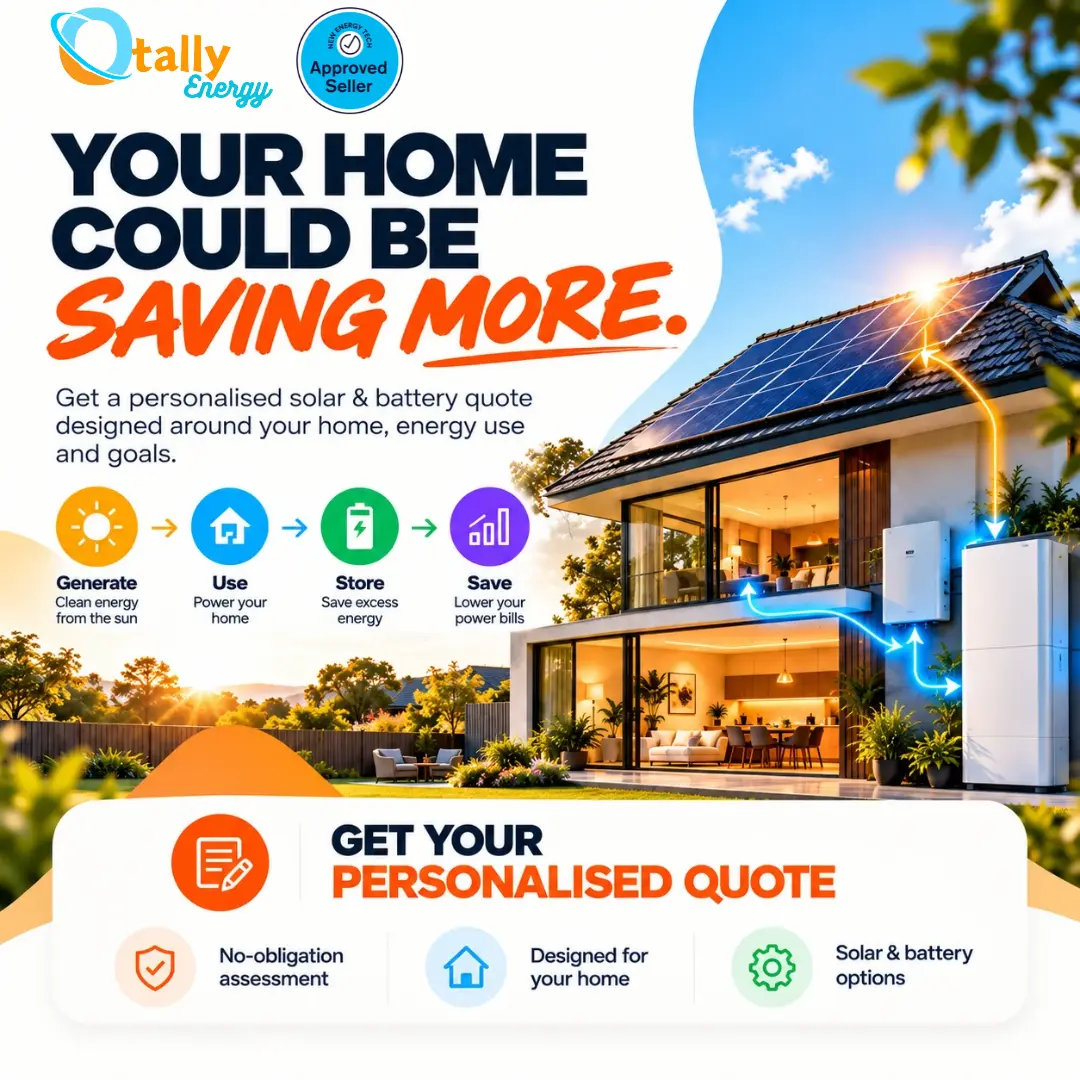
A solar battery is a sophisticated battery energy storage system that acts as a reservoir for the electricity your solar panels generate. Without storage, any energy your system produces that isn’t used the moment it’s created is sent back to the national grid. By installing a battery, you capture that excess daytime energy and save it for later. This simple shift turns your rooftop panels into a 24/7 power station, allowing Australian families and businesses to bridge the gap between when the sun shines and when they actually need the most power. It’s the foundation of genuine energy independence.
The Shift from Feed-in Tariffs to Storage
The economic landscape of solar has changed dramatically. Years ago, high feed-in tariffs meant you could make a decent profit by exporting your power. Today, those rates have plummeted. Most households now receive around 5c per kWh for their exports, yet they are forced to buy that same energy back for 30c per kWh or more once the sun goes down. This price gap makes exporting energy a losing game.
This shift is largely driven by the “Duck Curve,” a technical challenge where the grid becomes flooded with solar energy at midday but faces a massive spike in demand as people return home at night. Grid operators often struggle to manage this midday surplus, which is why export rewards are so low. Investing in a solar battery allows you to opt out of this cycle. Instead of selling your valuable green energy for peanuts, you store it to avoid those expensive peak rates in the evening.
Core Benefits: Bill Savings and Beyond
The most immediate impact of adding storage is a drastic reduction in “bill shock.” By drawing from your own stored reserves during the most expensive times of the day, you can effectively slash your reliance on the grid. This provides a level of financial certainty that traditional solar alone cannot match. Beyond the savings, there’s a powerful environmental case. Using a battery ensures your home or business runs on 100% renewable energy around the clock, even at midnight.
We also see that storage is becoming a standard expectation in the Australian property market. As energy costs continue to climb, a well-designed solar-plus-storage system is viewed as a premium asset that increases property value. It’s a pragmatic investment that secures your home against future price hikes while providing the peace of mind that comes with modern, sustainable living.
How Solar Batteries Work: The Technical Essentials
Understanding the technical side of a solar battery doesn’t require an engineering degree, but it does require a basic grasp of how energy moves through your home. Think of the inverter as the brain of the operation. It constantly monitors your solar panels, your household demand, and the grid. When your panels produce more than you need, the inverter directs that surplus into your battery. If the battery is full, the excess goes to the grid. This intelligent management highlights the critical role of battery storage in renewable energy, as it allows your home to remain powered by the sun long after sunset.
Systems are generally categorised as either DC-coupled or AC-coupled. DC-coupled systems are often more efficient for new installations because the energy stays in its original form (Direct Current) until it reaches the battery. AC-coupled systems are the go-to choice for retrofitting a battery to an existing solar setup. They use a separate battery inverter to convert power back and forth. While slightly less efficient due to multiple conversions, they offer great flexibility for older systems.
Chemistry Matters: LFP vs NMC
Not all lithium batteries are created equal. In Australia, we primarily see two chemistries: Lithium Iron Phosphate (LFP) and Lithium Nickel Manganese Cobalt (NMC). LFP is rapidly becoming the gold standard for residential use. It offers superior thermal stability, which is vital in our harsh climates, and generally boasts a longer cycle life. A cycle is one full charge and discharge. High-quality LFP units often manage over 6,000 cycles while maintaining 80% of their original capacity, ensuring your investment lasts for a decade or more.
Blackout Protection vs. Partial Backup
A common misconception is that every solar battery automatically provides power during a grid failure. In reality, most solar systems shut down during a blackout to prevent back-feeding the grid and endangering workers. If you want the lights to stay on, you need an Emergency Power Supply (EPS) function or a dedicated backup gateway.
You must also decide between a whole-home backup or an “essential circuits” approach. Most households choose to back up only the essentials like the fridge, Wi-Fi, and a few light circuits to ensure the stored energy lasts as long as possible. To get the balance right, we recommend using a free online estimation tool to see how much backup capacity your specific home requires before finalising your design.
Sizing Your System: How Much Storage Do You Need?
Sizing a solar battery isn’t about buying the biggest unit on the market. It’s about precision. You first need to distinguish between kilowatts (kW) and kilowatt-hours (kWh). Think of kW as the speed of your car and kWh as the size of the fuel tank. A battery with high kW can power heavy appliances like ovens or air conditioners simultaneously, while high kWh determines how long those appliances can run. To get this right, examine your evening energy consumption. Most Australian households find that their peak usage occurs between 5:00 PM and 10:00 PM. Measuring this window is the first step toward avoiding a system that is either too small to be useful or too large to ever pay for itself.
Many modern systems are now modular. This design allows you to start with a smaller capacity and “stack” additional modules later if your energy needs grow, such as when you buy an electric vehicle or add a pool heater. This flexibility protects you from over-investing upfront while keeping your options open for the future.
Matching a Battery to a 6.6kW Solar System
For many, a 6.6kW solar system represents the ideal entry point for residential storage. This array size typically provides enough surplus energy during the day to charge a 5kWh to 10kWh battery comfortably. Data from 2026 indicates that adding a 10kWh battery to a standard 6.6kW system can lift a household’s solar self-consumption from roughly 39% to 66%. This shift is where the genuine value lies. While the estimated payback period for a solar battery in Australia is currently around 8 years, the immediate reduction in daily grid reliance provides a level of financial security that traditional solar alone cannot match.
Commercial Storage: 20kW to 50kW Systems
Commercial installations, ranging from 20kW to 50kW, require a different strategic approach. Businesses often face “demand charges” based on their highest point of usage during the month. By using large-scale storage for “peak shaving,” a company can draw from its battery during these high-intensity periods to stay below the tariff threshold. These larger systems often utilise multi-battery stacks to handle the heavy loads of industrial refrigeration or office HVAC systems. Professional design is paramount here to ensure the battery capacity actually aligns with the business’s operational hours and avoids costly bottlenecks in energy delivery.

The Financials: Costs, Rebates, and ROI
The solar battery price is determined by several interlocking factors that go beyond simple storage capacity. Brand reliability, the depth of discharge, and the complexity of your current electrical setup all influence the final figure. For instance, an installation that requires a significant switchboard upgrade or a long cable run to the battery location will naturally cost more than a standard setup. We always advise looking past the initial sticker price to consider the cost per cycle, which is a far more accurate measure of long-term value.
While the upfront investment is a consideration, the 2026 incentive landscape has made storage more accessible than ever. By combining federal rebates with strategic energy management, the path to a positive return on investment is clearer. You can request a professional solar battery quote to see exactly how these financial levers work together for your home or business.
Understanding Virtual Power Plants (VPPs)
A Virtual Power Plant (VPP) is a network of distributed solar battery systems that can be controlled remotely to support the grid. When demand spikes, the VPP operator draws a small amount of power from your battery to help prevent blackouts. In return, you receive significant financial incentives. These often take the form of an upfront discount on the battery price or ongoing credits that appear on your quarterly bill. It is a partnership that helps stabilise the national grid while accelerating your system’s payback period. You should, however, check the terms to ensure you still have enough reserve power for your own evening needs.
Solar Battery Rebates and Incentives
The federal government’s Cheaper Home Batteries Program remains a primary driver for adoption in 2026. This 7.2 billion dollar initiative uses the Small-scale Technology Certificate (STC) scheme to provide an upfront discount. Currently, the STC factor is set at 6.8 per kWh of usable capacity for installations completed by 31 December 2026. This rebate is tiered to encourage standard residential sizes, with 100% of the factor applied to the first 14kWh of capacity. To secure these incentives, your system must meet specific criteria:
- The hardware must appear on the Clean Energy Council’s approved product list.
- Your installer must hold current accreditation from Solar Accreditation Australia (SAA).
- The battery must be technically capable of participating in a VPP.
- Installation must comply with the AS/NZS 5139:2019 safety standards.
By following this checklist, you ensure your investment is protected by both government standards and manufacturer warranties. This pragmatic approach shifts the focus from a simple “payback period” to the total lifetime value of your energy independence. Securing these incentives before the next scheduled step-down in January 2027 is a smart way to maximise your financial outcome.
The Tally Energy Guide to a Seamless Installation
Achieving energy independence requires more than just purchasing hardware; it demands a methodical approach to integration. We’ve refined a professional four-step solar journey to ensure your transition is transparent and technically sound. This structured pathway moves from initial design through to long-term maintenance, ensuring your solar battery remains a high-performing asset for its entire lifespan. We prioritise your long-term success over a quick sale, acting as a protective expert to shield you from the common pitfalls of a rushed installation.
The journey begins with a comprehensive design phase where we analyse your specific consumption patterns. Once the design is finalised, we provide a clear, fixed quote followed by a professional installation that meets all Australian safety standards. The final step is ongoing maintenance and monitoring. By using smart monitoring apps, you gain real-time visibility into your energy flow, allowing you to see exactly how much sun you’re storing and where your savings are coming from. This national support network ensures that help is always available, backed by robust warranties that offer genuine peace of mind.
Professional Design: Why Sizing Matters
Professional solar design is the bridge between owning a piece of hardware and owning a high-performing energy asset. A common mistake in the Australian market is opting for a “cheap” installation that ignores the specific layout of your home or business. These cut-price setups often lead to “battery bottlenecks,” where the system cannot charge or discharge fast enough to meet your peak demands. We use precise data to customise your storage solution, integrating smart energy management technology that decides the most efficient way to use every watt. This bespoke approach ensures your battery actually delivers the ROI promised during the design phase.
Taking the Next Step: Your Energy Independence
Securing your energy future is a significant decision, and we’re here to provide the consultative guidance you need to get it right. Our team takes a proactive and organised approach, ensuring you understand every technical detail without being overwhelmed by jargon. We recommend starting with a clear understanding of your potential. You can use our free online estimation tool to see how a tailored system could transform your power bills. When you’re ready to move from research to reality, our experts are available to design a system that fits your specific needs. Take the first step toward a more secure, sustainable home and Get a free solar battery quote from Tally Energy Group today.
Securing Your Energy Future
Transitioning to a smarter home energy strategy involves more than just selecting hardware; it’s about shifting from a passive consumer to an empowered producer. By understanding the critical balance between storage capacity and daily usage, you can transform your rooftop into a reliable 24/7 power source. Integrating a solar battery ensures you’re no longer at the mercy of rising grid prices or diminishing export returns. It provides the security of blackout protection and the financial certainty that comes with true energy independence.
Tally Energy Group is here to guide you through this transition with national expert installation and Tier 1 hardware solutions. Every property has unique requirements, which is why we prioritise custom system design to ensure your investment delivers the maximum ROI possible. You can Request a personalised solar battery quote from Tally Energy to begin your organised four-step journey toward independence. The path to a sustainable, resilient home is clearer than ever. We look forward to helping you take full control of your energy future with confidence.
Frequently Asked Questions
How long does a solar battery typically last in the Australian climate?
Most high-quality lithium batteries carry a 10-year warranty, though their actual lifespan depends on usage and chemistry. Lithium Iron Phosphate (LFP) units are particularly well-suited to our harsh climate because they offer superior thermal stability. You can typically expect an LFP system to manage over 6,000 cycles while maintaining 80% of its original capacity. This usually translates to 10 to 15 years of reliable service before any significant degradation occurs.
Can I add a battery to my existing solar system later on?
You can certainly retrofit a storage solution to an existing array. If you already have a standard string inverter, we typically use an AC-coupled configuration to integrate the new unit. Alternatively, if your current inverter is reaching the end of its life, you might choose to replace it with a hybrid model. This flexibility allows you to transition to energy independence at a pace that suits your household budget and energy goals.
Will a solar battery power my house during a blackout?
A standard solar battery installation does not provide blackout protection by default due to safety regulations. To keep your home running during a grid failure, your system must include an Emergency Power Supply (EPS) function or a dedicated backup gateway. Most homeowners choose to back up essential circuits, such as the fridge, lighting, and Wi-Fi, rather than the entire house. This ensures your stored energy lasts as long as possible during extended outages.
What is the difference between a hybrid inverter and a battery inverter?
A hybrid inverter is an all-in-one unit that manages both your solar panels and your battery storage. It is the preferred choice for new installations because it simplifies the system architecture. In contrast, a battery inverter is a dedicated device used primarily for retrofitting storage to an existing solar setup. It works alongside your original solar inverter, converting stored energy from the battery into usable power for your home when needed.
Are solar batteries safe to install inside my home or garage?
Modern energy storage systems are very safe when installed by accredited professionals according to Australian standards. All installations must comply with AS/NZS 5139:2019, which dictates specific safety clearances and fire-rated backing requirements. While many units are rated for outdoor use, installing them in a garage or under a carport provides extra protection from direct sunlight and extreme temperatures. This helps maintain the unit’s efficiency and longevity over the long term.
How much can I realistically save on my power bill with a battery?
Your savings depend on how much of your own solar energy you can shift from midday to the evening peak. Adding a 10kWh solar battery to a 6.6kW system can increase your self-consumption from roughly 39% to 66%. By avoiding expensive peak grid rates, many Australian households see their quarterly power bills drop significantly. The exact financial outcome varies based on your specific energy tariffs and how effectively you time your heavy appliance usage.
Do I need a special type of solar panel to work with a battery?
You don’t need specific solar panels to work with storage. Standard Tier 1 panels are perfectly compatible with any modern storage solution. The critical component is actually the inverter, which must be capable of communicating with the battery management system. Whether you have a 6.6kW or a 50kW array, the panels simply provide the raw energy; the “brain” of the system handles the storage and distribution of that power.
What happens to the battery when it reaches the end of its life?
Once a unit reaches the end of its functional life, it shouldn’t be sent to a standard landfill. Australia has established recycling programs specifically for lithium-ion technology to recover valuable materials like lithium, cobalt, and copper. Many manufacturers are now part of stewardship schemes that ensure these components are processed responsibly. This circular approach reduces environmental impact and allows the raw materials to be reused in the production of new energy storage products.
Related guides: Solar battery installation in Sydney · Federal battery rebate 2026 explained · Solar battery on the Central Coast.








Comments are closed